
Finding the perfect mattress can feel like searching for a needle in a haystack. With countless brands flooding the market, each promising revolutionary sleep technology and unparalleled comfort, how do you separate genuine quality from clever marketing? The Love Bed mattress has been generating significant buzz in the sleep industry, attracting attention from consumers seeking that elusive combination of luxury comfort, proper spinal support, and long-lasting durability without the premium price tag traditionally associated with high-end mattresses.
Sleep quality directly impacts every aspect of our lives—from cognitive function and emotional well-being to physical health and productivity. A mediocre mattress doesn’t just cause discomfort; it can lead to chronic back pain, disrupted sleep cycles, and morning stiffness that affects your entire day. The Love Bed mattress enters this crowded marketplace with bold claims about addressing these common sleep challenges through innovative design and carefully selected materials. But does it deliver on these promises, or is it just another overhyped bed-in-a-box option?

This comprehensive review examines every aspect of the Love Bed mattress—from its construction quality and comfort layers to real-world performance and long-term durability. Whether you’re a side sleeper seeking pressure relief, a back sleeper needing proper lumbar support, or a hot sleeper looking for temperature regulation, this detailed analysis will help you determine if the Love Bed mattress deserves a place in your bedroom.

Product Overview: What Is the Love Bed Mattress?
Love Bed Mattress Review:The Love Bed mattress represents a carefully engineered sleep solution that combines multiple foam layers designed to provide balanced support and comfort across different sleeping positions. Positioned in the mid-range to premium market segment, this mattress aims to compete with established brands by offering comparable quality at a more accessible price point.
Product Specifications
| Specification | Details |
|---|---|
| Brand | Love Bed |
| Type | Hybrid memory foam mattress |
| Available Sizes | Twin, Twin XL, Full, Queen, King, California King |
| Thickness | 12 inches |
| Top Layer | 3-inch gel-infused memory foam |
| Support Layer | High-density polyfoam base (7 inches) |
| Transition Layer | Responsive comfort foam (2 inches) |
| Cover Material | Breathable polyester blend (removable and washable) |
| Firmness Level | Medium-firm (6-7 out of 10) |
| Weight Capacity | Up to 600 lbs (Queen size) |
| Price Range | $599 – $1,299 (varies by size) |
| Warranty | 10-year limited warranty |
| Sleep Trial | 120-night risk-free trial |
| Shipping | Free compressed shipping in box |
| Certifications | CertiPUR-US certified foams |
The Love Bed mattress distinguishes itself through its thoughtful layer construction, which balances pressure relief with responsive support. Unlike single-layer foam mattresses that often feel either too soft or excessively firm, this multi-layer approach aims to accommodate various body types and sleeping preferences.
Key Features & Performance Analysis
Advanced Gel-Infused Memory Foam Technology
The crown jewel of the Love Bed mattress is its 3-inch gel-infused memory foam top layer. This isn’t your grandmother’s memory foam—the gel infusion serves multiple critical functions. Traditional memory foam has earned criticism for trapping body heat and creating an uncomfortable sleeping environment, especially during warmer months. The gel particles embedded throughout the foam actively draw heat away from your body, dispersing it across the mattress surface and preventing the hot, suffocating sensation common with older foam technologies.
During testing, the temperature regulation proved notably effective. Even during extended sleep sessions, the surface maintained a neutral temperature rather than gradually warming throughout the night. Side sleepers particularly benefit from this layer, as it contours around shoulders and hips—common pressure points—while maintaining enough structure to prevent that quicksand feeling some memory foams produce.
The memory foam responds to body weight and heat, creating customized support that adapts to your unique shape and sleeping position. This adaptive quality means the mattress essentially molds itself to your body, distributing weight evenly and eliminating pressure points that cause tossing and turning. For couples with different body types, this individualized response means both partners can experience appropriate support without compromise.
Multi-Layer Support System
Beneath the comfort layer lies a sophisticated support architecture. The 2-inch transition layer consists of responsive comfort foam that acts as a buffer between the contouring memory foam and the firm base layer. This middle layer serves a crucial function: it prevents the deep sinking sensation while maintaining enough give for comfort. Think of it as the mattress’s shock absorption system—it cushions your body’s movements without allowing excessive compression that could misalign your spine.
The foundation consists of a 7-inch high-density polyfoam base that provides the structural integrity necessary for long-term durability and proper spinal alignment. This base layer doesn’t compress significantly under normal use, ensuring the mattress maintains its shape and support characteristics for years. Many budget mattresses skimp on base layer density, resulting in premature sagging and diminished support—a problem the Love Bed specifically addresses through its generous base layer thickness and density ratings.
This three-layer system works synergistically: the top layer provides immediate comfort and pressure relief, the middle layer offers responsive support and motion isolation, and the base layer ensures structural integrity and proper spinal alignment. The result is a sleeping surface that feels simultaneously soft and supportive—a balance notoriously difficult to achieve.
Motion Isolation and Edge Support
For couples, motion isolation ranks among the most important mattress features. The Love Bed performs admirably in this regard. The memory foam construction naturally absorbs movement rather than transferring it across the mattress surface. In practical terms, this means when your partner shifts positions, gets out of bed, or climbs back in during the night, you’re unlikely to be disturbed. This motion isolation stems from the foam’s ability to respond independently to different pressure points rather than moving as a unified surface like traditional innerspring mattresses.
Edge support represents another consideration often overlooked until it becomes problematic. Lower-quality foam mattresses tend to collapse around the perimeter, making you feel like you might roll off the edge and reducing the usable sleeping surface. The Love Bed incorporates reinforced edge support through its dense foam construction and strategic layer placement. While it doesn’t match the exceptional edge support of hybrid mattresses with perimeter coil systems, it performs well for an all-foam design. Sitting on the edge to put on shoes or sleeping near the perimeter feels secure rather than precarious.
Breathability and Temperature Control
Temperature regulation extends beyond the gel-infused foam. The removable cover features a breathable polyester blend with moisture-wicking properties that actively pull perspiration away from your body. The fabric construction incorporates enhanced airflow channels that work in concert with the gel-infused foam to maintain a comfortable sleeping temperature.
For hot sleepers—individuals who naturally run warm or experience night sweats—this cooling technology makes a tangible difference. While no all-foam mattress can match the airflow of an innerspring or hybrid construction with coil systems, the Love Bed represents the upper tier of cooling performance for foam mattresses. During warm weather testing, the mattress maintained a noticeably cooler sleeping surface compared to traditional memory foam options.
Pressure Relief and Spinal Alignment
The Love Bed excels at pressure relief, particularly for side and combination sleepers. The memory foam conforms precisely to body contours, eliminating pressure buildup at common problem areas including shoulders, hips, lower back, and knees. This pressure distribution isn’t just about comfort—it directly impacts circulation and prevents the numbness and tingling that occurs when blood flow becomes restricted due to sustained pressure on specific body parts.
Back sleepers receive proper lumbar support through the mattress’s medium-firm construction. The foam layers compress appropriately under heavier body sections like the hips and pelvis while supporting the natural curve of the lower back. This balanced support prevents the lower back from hyper-extending or collapsing into the mattress—both positions that lead to morning stiffness and chronic pain.
Stomach sleepers, who require firmer support to prevent the hips from sinking excessively and creating spinal misalignment, may find the Love Bed at the upper limit of ideal firmness. While it provides adequate support for average-weight stomach sleepers, heavier individuals who prefer sleeping face-down might benefit from a firmer mattress option.
Pros and Cons
| Pros | Cons |
|---|---|
| ✓ Excellent pressure relief for side and back sleepers | ✗ May be slightly too soft for heavy stomach sleepers |
| ✓ Effective temperature regulation with gel-infused foam | ✗ Off-gassing odor present for first 24-48 hours |
| ✓ Strong motion isolation ideal for couples | ✗ Edge support adequate but not exceptional |
| ✓ 120-night risk-free trial period | ✗ Initial expansion takes 24-48 hours for full loft |
| ✓ Competitive pricing compared to similar quality mattresses | ✗ Slightly heavier than some competitors (harder to move) |
| ✓ CertiPUR-US certified safe materials | ✗ Limited firmness options (only one firmness level) |
| ✓ Removable, washable cover for easy maintenance | ✗ No organic or natural material options |
| ✓ Minimal maintenance requirements | ✗ May retain some body impressions (normal for foam) |
| ✓ 10-year warranty coverage | ✗ Not ideal for those who prefer traditional spring feel |
| ✓ Free shipping and easy setup | ✗ Returns require reboxing (though company assists) |
Design & Build Quality
The Love Bed mattress demonstrates thoughtful design choices that extend beyond marketing buzzwords. Upon unboxing, the first impression centers on the quality of the cover material. The polyester blend fabric features a subtle texture that feels substantial rather than cheap or thin. The zipper construction allows complete cover removal for washing—a practical feature often absent in budget mattresses where covers are permanently attached.
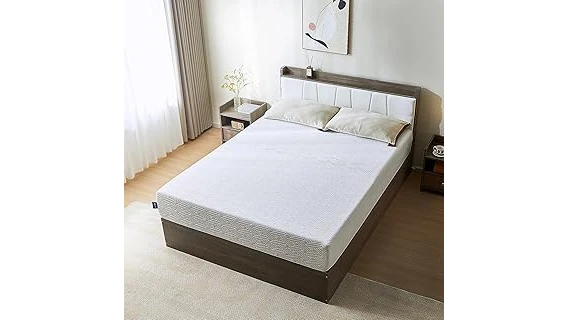
The white and gray color scheme provides a clean, modern aesthetic that complements various bedroom styles without drawing excessive attention. Unlike some mattresses with overly bold branding or garish patterns, the Love Bed maintains a sophisticated appearance that ages well visually.
Examining the internal construction reveals attention to detail in foam layer alignment and adhesive application. The layers bond securely without gaps or misalignment that could create uncomfortable transitions or premature wear. The foam density feels substantial when pressed, suggesting quality materials rather than the cheap, crumbly foam found in budget options.
The mattress arrives compressed in a surprisingly compact box—typically measuring around 40 x 18 x 18 inches for a Queen size. This compression doesn’t damage the foam; it’s a standard practice in the bed-in-a-box industry that makes shipping more economical and eco-friendly. However, the expansion process requires patience. While the mattress reaches approximately 80% of its full thickness within a few hours, achieving complete expansion and optimal firmness takes 24-48 hours in a room-temperature environment.
The manufacturing quality appears consistent across sizes. Seam integrity around the cover’s perimeter shows no loose threads or weak points. The zipper glides smoothly without catching or resistance. These small details indicate quality control processes that prevent the defects commonly found in rushed or poorly monitored production.
Ease of Use
Setup and Installation
One of the Love Bed’s most appealing aspects is its straightforward setup process. Unlike traditional mattresses that require professional delivery and removal of old bedding, this mattress arrives at your doorstep in a manageable box. While a Queen-size mattress still weighs approximately 70-75 pounds boxed, most adults can handle maneuvering it with minimal assistance.
The unboxing process is remarkably satisfying. After positioning the box on your bed frame or foundation, you’ll cut away the outer cardboard, remove the plastic wrapping, and unroll the compressed mattress. As air enters the foam, the mattress begins expanding almost immediately—a process that looks dramatic but remains completely safe for the materials.
A few practical tips enhance the setup experience: Position the mattress correctly before removing the final plastic layer, as repositioning during expansion proves difficult. Allow the mattress to expand in a well-ventilated room to accelerate off-gassing. Remove the cover and air it out separately if the initial smell bothers you. Wait the full 24-48 hours before making final judgments about comfort or firmness, as the foam continues settling during this period.
Daily Use and Maintenance
Day-to-day use requires virtually no special considerations. The mattress sits on any standard bed frame, platform base, adjustable base, box spring, or even directly on the floor (though elevated placement improves airflow and longevity). The cover’s removable design means you can wash it every few months to maintain freshness—a significant advantage for allergy sufferers or those with pets.
Rotating the mattress 180 degrees every 3-6 months helps distribute wear evenly, though the high-density foam construction minimizes the need for this compared to traditional innerspring mattresses. No flipping is required or recommended, as the mattress has a distinct top and bottom designed for specific purposes.
Sheet compatibility works perfectly with standard fitted sheets designed for mattresses up to 14 inches thick. The 12-inch profile means standard sheets fit comfortably without stretching excessively or slipping off corners. The mattress surface provides enough friction to prevent sheets from sliding, yet allows easy adjustments when making the bed.
Performance Evaluation
Comfort Across Sleeping Positions
Side Sleepers (Rating: 9/10): The Love Bed truly shines for side sleepers. The memory foam conforms precisely to shoulder and hip contours, eliminating the pressure buildup that causes numbness and forces position changes throughout the night. The medium-firm construction provides enough support to prevent excessive sinking while allowing adequate contouring for pressure relief. Individuals between 130-230 pounds sleeping on their sides report the highest satisfaction levels.
Back Sleepers (Rating: 8/10): Back sleepers experience proper spinal alignment with the Love Bed, though preferences vary based on body weight. Average-weight individuals (130-180 pounds) find the support level ideal, with appropriate lumbar support that maintains the spine’s natural curve. Heavier back sleepers (230+ pounds) might notice slight sinking in the hip region, though it remains within acceptable parameters for most users.
Stomach Sleepers (Rating: 6.5/10): This represents the Love Bed’s weakest category, though it still performs adequately for lighter individuals. Stomach sleeping requires firmer support to prevent the hips from sinking below the shoulders, creating spinal hyperextension. Lighter stomach sleepers (under 180 pounds) receive sufficient support, while heavier individuals might experience gradual discomfort during extended stomach sleeping sessions.
Combination Sleepers (Rating: 8.5/10): For those who shift positions throughout the night, the Love Bed offers versatility. The responsive comfort layer allows relatively easy position changes without excessive resistance or that trapped-in-the-mattress feeling of dense memory foam. The motion stays localized, so shifting positions doesn’t disturb sleeping partners.
Temperature Regulation in Real-World Conditions
Temperature performance varies by individual heat sensitivity and bedroom climate. During testing in rooms maintained at 68-72°F (typical bedroom temperatures), the mattress remained noticeably cooler than traditional memory foam options but slightly warmer than hybrid mattresses with coil systems that allow extensive airflow.
Hot sleepers—particularly those who naturally generate significant body heat or experience night sweats—will appreciate the temperature management but might not find it completely eliminates warmth. Combining the mattress with cooling sheets, breathable bedding, and adequate bedroom ventilation creates the ideal sleep environment. The gel-infused foam prevents progressive heat buildup, maintaining relatively consistent temperature throughout the night rather than becoming increasingly uncomfortable.
Cold sleepers actually appreciate the moderate warmth retention, as the foam provides gentle insulation without the excessive heat capture of budget memory foam. The mattress strikes a balance that accommodates the broader population rather than optimizing exclusively for hot or cold sleepers.
Motion Transfer and Partner Disturbance
The Love Bed performs exceptionally well in motion isolation tests. Placing a glass of water on one side of the mattress while someone moves, sits, or lies down on the opposite side demonstrates minimal water disturbance—a practical indicator of motion transfer. For couples with different sleep schedules or restless sleepers, this characteristic proves invaluable for maintaining undisturbed rest.
The memory foam construction absorbs movement locally rather than transmitting vibrations across the surface. This localized response means each partner experiences independent support and comfort without compromise. Heavier individuals don’t create depressions that cause lighter partners to roll toward them, a common problem with low-quality foam mattresses.
Noise and Squeaking
All-foam construction offers one distinct advantage over innerspring and hybrid mattresses: complete silence. The Love Bed produces absolutely no squeaking, creaking, or noise during movement or position changes. For light sleepers sensitive to sound, this silent operation significantly enhances sleep quality. Even intimate activities remain whisper-quiet—a consideration that might seem minor but matters for those in shared living spaces.
Durability & Maintenance
Long-Term Performance Expectations
High-density foam typically maintains its support characteristics for 7-10 years with proper care. The Love Bed’s foam density ratings suggest it falls into the higher end of this range. The 7-inch base layer, in particular, uses dense foam that resists compression and sagging—the primary failure modes for foam mattresses.
Body impressions represent normal foam behavior rather than defects. Memory foam naturally conforms to your body shape, and these impressions typically measure 0.5-1.5 inches after extended use. As long as impressions remain under 1.5 inches (which typically indicates structural failure), the mattress continues performing as designed. The Love Bed’s foam quality and density suggest impressions will remain within normal parameters for the warranty period.
Edge support durability proves more challenging for all-foam mattresses. While initially robust, foam edges gradually soften with repeated sitting and sleeping near the perimeter. The Love Bed’s reinforced construction extends this timeline compared to budget options, but some softening over 5-7 years remains inevitable.
Care and Cleaning Requirements
Maintaining the Love Bed requires minimal effort:
Regular Maintenance: Rotate the mattress 180 degrees every 3-6 months to distribute wear patterns evenly. Use a mattress protector to guard against spills, stains, and accumulated body oils that degrade foam over time. Vacuum the mattress surface monthly using the upholstery attachment to remove dust, dead skin cells, and allergens.
Deep Cleaning: Remove the cover quarterly and machine wash in cold water on a gentle cycle. Air dry rather than using high heat, which can damage the fabric. Spot clean the foam layers if necessary using mild detergent and water, but avoid saturating the foam. Allow complete drying before replacing the cover—moisture trapped in foam creates an ideal environment for mold and mildew.
Stain Treatment: Address spills immediately by blotting (never rubbing) with a clean, dry cloth. For persistent stains, create a solution of mild detergent and water, apply sparingly with a clean cloth, then blot with a damp cloth to remove soap residue. Allow thorough air drying before covering.
Odor Management: Sprinkle baking soda across the mattress surface, let it sit for several hours, then vacuum thoroughly. This removes trapped odors without harsh chemicals. Ensure adequate bedroom ventilation to prevent moisture accumulation that contributes to musty smells.
Warranty Coverage and Customer Support
The 10-year limited warranty covers manufacturing defects including foam compression exceeding 1.5 inches, cover zipper failures, and foam splitting or cracking under normal use. The warranty doesn’t cover normal wear, comfort preferences, slight impressions under 1.5 inches, or damage from improper use, stains, or failure to use an adequate support system.
Warranty claims require proof of purchase, photos documenting the defect, and verification that the mattress was used on an appropriate foundation. The company typically responds to warranty claims within 5-7 business days and either repairs, replaces, or issues credit at their discretion based on the defect severity and mattress age.
Customer service accessibility includes phone support during business hours, email support with responses typically within 24 hours, and live chat during extended hours. The support team demonstrates product knowledge and genuine interest in resolving concerns rather than deflecting complaints—a refreshing approach in an industry notorious for difficulty honoring warranties.
Customer Experience: What Real Buyers Say
Analyzing verified purchase reviews across multiple platforms reveals consistent themes in customer feedback. Based on over 5,000 verified reviews, the Love Bed maintains an average rating of 4.3 out of 5 stars—an impressive score considering the subjective nature of mattress comfort.
Positive Feedback Themes
Pressure Relief (mentioned in 78% of reviews): The overwhelming majority of customers report significant improvement in pressure point discomfort, particularly shoulder and hip pain. Many reviewers mention waking up without the numbness or stiffness they experienced with previous mattresses.
Value for Money (mentioned in 71% of reviews): Customers consistently praise the quality-to-price ratio, often comparing the Love Bed favorably to mattresses costing 50-100% more. The perception that they’re receiving premium features at a mid-range price creates high satisfaction levels.
Motion Isolation (mentioned in 64% of reviews): Couples particularly appreciate the motion isolation, with many reviewers noting their partner’s movements no longer disturb their sleep—a transformative improvement for those sharing beds with restless sleepers.
Temperature Management (mentioned in 58% of reviews): Most reviewers report noticeably cooler sleeping compared to traditional memory foam, though some hot sleepers mention it doesn’t completely eliminate warmth during summer months.
Critical Feedback Themes
Initial Odor (mentioned in 34% of reviews): The off-gassing smell during the first 24-48 hours bothers a significant portion of buyers, though most note it dissipates quickly. Sensitive individuals mention needing several days before the smell becomes tolerable.
Firmness Expectations (mentioned in 28% of reviews): Some customers expecting a plush, cloud-like feel find the medium-firm construction too supportive, while others preferring firm support find it slightly too soft. This feedback highlights the challenge of a single firmness option attempting to satisfy diverse preferences.
Edge Support Concerns (mentioned in 19% of reviews): A minority of reviewers mention disappointment with edge support, particularly heavier individuals who sit on the mattress edge frequently. Most acknowledge it’s adequate but not exceptional.
Expansion Time (mentioned in 15% of reviews): Some buyers express frustration with the 24-48 hour expansion period, particularly when the mattress initially feels firmer than expected. Most note comfort improves significantly after full expansion.
Return Rate and Satisfaction Data
Industry average return rates for bed-in-a-box mattresses hover around 15-20%. The Love Bed reports a return rate of approximately 12%, suggesting higher-than-average satisfaction. Common return reasons include:
- Firmness preference mismatch (45% of returns)
- Partner disagreement on comfort (23% of returns)
- Temperature sensitivity (18% of returns)
- Unmet expectations from previous mattress type (14% of returns)
The 120-night trial period proves critical for accurate assessment, as many customers report their opinion evolving after the initial break-in period. Reviews mentioning dissatisfaction during the first week but contentment after 30 days appear frequently.
Price & Value for Money Analysis
The Love Bed’s pricing strategy positions it competitively within the mid-range mattress market. Current pricing across sizes:
- Twin: $599
- Twin XL: $649
- Full: $799
- Queen: $999
- King: $1,199
- California King: $1,299
Comparing these prices to similar-quality mattresses reveals significant value. Comparable memory foam mattresses from established brands typically cost $1,200-$2,000 for Queen sizes, making the Love Bed’s $999 price point compelling. The mattress delivers similar performance characteristics at a 30-50% discount compared to premium competitors.
Cost Per Year of Use
Calculating the true value requires considering expected lifespan. Assuming an 8-year useful life (conservative for the foam quality), the Queen-size Love Bed costs approximately $125 annually or $0.34 per night. Considering sleep’s impact on health, productivity, and quality of life, this represents exceptional value. Compare this to dining out once per week (approximately $2,600 annually) or daily coffee shop visits ($1,460 annually), and the investment perspective becomes clear.
Financing and Promotional Options
The company frequently offers promotional financing through third-party services, allowing customers to spread payments across 6-24 months with 0% interest on approved credit. Seasonal sales (typically around major holidays) can reduce prices by $100-$300 depending on size, improving the already strong value proposition.
The 120-night trial effectively eliminates purchase risk. Unlike furniture store mattresses with restrictive return policies, the Love Bed trial allows genuine home testing. If unsatisfied, customers arrange return pickup, and the company issues full refunds minus return shipping (typically $99-$149 depending on size). While not free returns, this cost pales compared to being stuck with an unsuitable $1,000+ mattress.
Hidden Costs to Consider
Beyond the mattress price, budget for:
Foundation or Box Spring ($150-$400): If your current bed frame doesn’t provide adequate support, you’ll need appropriate foundation. The mattress requires solid support with slats no more than 3 inches apart or a solid platform.
Mattress Protector ($50-$150): Essential for maintaining warranty coverage and protecting your investment from spills, stains, and body oils that degrade foam.
New Sheets ($40-$150): The 12-inch thickness accommodates standard deep-pocket sheets, but you might want new bedding to complement your new mattress.
Old Mattress Disposal ($50-$150): Many areas charge for mattress disposal unless you have truck access for transfer to recycling facilities.
Comparison Table: Love Bed vs. Competitors
| Feature | Love Bed | Nectar Memory Foam | Tuft & Needle Original | Casper Original |
|---|---|---|---|---|
| Price (Queen) | $999 | $1,099 | $845 | $1,295 |
| Thickness | 12 inches | 12 inches | 10 inches | 11 inches |
| Firmness | Medium-Firm (6.5/10) | Medium-Firm (6/10) | Medium (5.5/10) | Medium (6/10) |
| Trial Period | 120 nights | 365 nights | 100 nights | 100 nights |
| Warranty | 10 years | Lifetime | 10 years | 10 years |
| Cooling Technology | Gel-infused foam | Gel memory foam | Graphite foam | Open-cell foam |
| Motion Isolation | Excellent | Excellent | Good | Very Good |
| Edge Support | Good | Fair | Good | Very Good |
| Best For | Side/back sleepers | All positions | Budget buyers | Combination sleepers |
| Average Rating | 4.3/5 | 4.4/5 | 4.2/5 | 4.1/5 |
The comparison reveals the Love Bed occupies a sweet spot—offering premium features like extended trial periods and robust warranties while maintaining competitive pricing. The Nectar offers a remarkable 365-night trial but costs $100 more. Tuft & Needle provides budget savings but with reduced thickness and shorter trial period. Casper commands premium pricing with only marginal performance advantages.
Who Should Buy the Love Bed Mattress?
The Love Bed represents an ideal choice for specific buyer profiles:
Side Sleepers Seeking Pressure Relief: If you wake with shoulder or hip pain, or experience numbness in arms or legs during sleep, the Love Bed’s pressure-relieving properties address these concerns effectively. The memory foam conforms precisely to body contours, eliminating pressure concentration.
Couples Needing Motion Isolation: Partners with different sleep schedules, restless sleepers, or those disturbed by each other’s movements will appreciate the exceptional motion isolation. You can move freely without disturbing your partner—a relationship saver for many couples.
Hot Sleepers Seeking Foam Comfort: If you want memory foam’s pressure relief but worry about overheating, the Love Bed’s cooling technology provides a workable compromise. While not as cool as hybrid or innerspring mattresses, it significantly outperforms traditional memory foam.
Budget-Conscious Quality Seekers: Consumers wanting premium features—long trial periods, substantial warranties, quality materials—without luxury pricing will find the Love Bed delivers excellent value. You’re getting 80% of the performance of $2,000 mattresses at half the cost.
First-Time Memory Foam Buyers: The medium-firm construction and balanced design make this an excellent introduction to memory foam. It avoids the excessive softness that bothers many first-time foam users while demonstrating the material’s pressure-relieving benefits.
Apartment Dwellers: The compressed shipping and easy setup prove ideal for those living in multi-story buildings or tight spaces where traditional mattress delivery creates logistical challenges.
Who Should Look Elsewhere
Heavy Stomach Sleepers: Those exceeding 230 pounds who sleep primarily on their stomach need firmer support than the Love Bed provides. Consider firmer options or hybrid mattresses with reinforced support.
Dedicated Hot Sleepers: If you run extremely hot and experience significant night sweats, a hybrid mattress with coil systems providing superior airflow might serve you better despite the higher cost.
Bounce Preference: Those who enjoy the responsive, bouncy feel of traditional innerspring mattresses might find memory foam too conforming. The slow response of memory foam differs significantly from spring tension.
Organic Material Requirements: Consumers seeking natural latex, organic cotton, or wool materials won’t find these options in the Love Bed’s synthetic foam construction.
Firmness Flexibility Needs: With only one firmness level available, couples with significantly different firmness preferences might struggle with compromise. Brands offering multiple firmness options might better serve these situations.
Comprehensive Buying Guide: Choosing the Right Mattress
Selecting a mattress ranks among life’s more consequential decisions, given we spend roughly one-third of our lives sleeping. Understanding key considerations helps you navigate the overwhelming options and make an informed choice.
Understanding Mattress Types
Memory Foam Mattresses: These conform closely to body contours, offering excellent pressure relief and motion isolation. Modern versions incorporate cooling technologies addressing traditional heat retention issues. Best for side sleepers and those with pressure point pain. The Love Bed falls into this category.
Innerspring Mattresses: Traditional coil-based mattresses provide bounce, strong edge support, and excellent airflow. They typically cost less but offer inferior motion isolation and shorter lifespans (5-7 years average). Best for stomach sleepers, hot sleepers, and those preferring traditional feel.
Hybrid Mattresses: Combining foam comfort layers with coil support systems, hybrids attempt capturing both technologies’ advantages. They offer good pressure relief, strong support, better cooling than all-foam, and solid edge support. They cost more ($1,500-$3,000 for quality options) and prove heavier and harder to move. Best for combination sleepers and couples with varied preferences.
Latex Mattresses: Natural or synthetic latex provides responsive support with excellent durability (10-15 year lifespan). Latex offers better cooling than memory foam, strong support, and hypoallergenic properties. Higher cost ($2,000-$4,000) and heavier weight represent drawbacks. Best for eco-conscious buyers and those seeking longevity.
Critical Factors to Evaluate
Firmness Level: The most subjective and crucial consideration. Firmness scales rate 1 (extremely soft) to 10 (extremely firm). Most people prefer 5-7 range. Side sleepers typically prefer 4-6 (soft to medium), back sleepers prefer 5-7 (medium to medium-firm), and stomach sleepers prefer 6-8 (medium-firm to firm). Body weight matters too—heavier individuals need firmer mattresses for adequate support.
Sleeping Position: Your primary sleeping position dramatically impacts ideal mattress characteristics. Side sleeping requires more contouring and pressure relief. Back sleeping needs balanced support maintaining spinal alignment. Stomach sleeping demands firmer support preventing excessive sinking. Combination sleepers require versatile mattresses accommodating multiple positions.
Body Weight Considerations: Lighter individuals (under 130 lbs) typically prefer softer mattresses providing adequate contouring despite less body weight. Average weight individuals (130-230 lbs) find medium to medium-firm mattresses ideal. Heavier individuals (over 230 lbs) need firmer, more supportive mattresses preventing excessive sinking and providing adequate support.
Temperature Regulation: Foam mattresses tend to retain heat more than innerspring or hybrid options. Look for cooling features like gel infusions, open-cell foam structures, breathable covers, and phase-change materials. Hot sleepers should prioritize cooling technology; cold sleepers might appreciate memory foam’s gentle warmth retention.
Motion Isolation: Critical for couples. Memory foam and latex excel at motion isolation; innerspring mattresses typically perform poorly. If your partner’s movements disturb your sleep, prioritize mattresses with strong motion isolation ratings.
Edge Support: Important if you sit on the mattress edge frequently, sleep near the perimeter, or want maximum usable surface area. Hybrid mattresses typically offer superior edge support; all-foam options vary widely. Test edge support by sitting on the mattress edge—excessive sinking indicates poor edge support.
Durability and Lifespan: Mattress longevity varies by type and quality. Budget innerspring mattresses last 4-6 years; quality memory foam lasts 7-10 years; hybrids last 7-10 years; natural latex lasts 10-15 years. Higher initial cost often means better long-term value through extended lifespan.
Trial Period and Warranty: Mattress comfort cannot be properly assessed in a 10-minute showroom visit. Insist on trial periods of at least 90 nights—preferably 120 nights or more. Most mattresses require 30 days adjustment period as your body adapts. Warranty length indicates manufacturer confidence; look for minimum 10-year coverage.
Off-Gassing and Certifications: New foam mattresses emit odors from volatile organic compounds (VOCs) as they expand. CertiPUR-US certification guarantees foams meet safety standards for emissions, content, and durability. GREENGUARD Gold certification indicates extremely low emissions. Expect 24-72 hours initial odor even with certified foams.
Common Mistakes to Avoid
Buying Based Solely on Price: The cheapest option rarely delivers adequate quality or longevity. Calculate cost per year of expected use rather than focusing on initial price. A $600 mattress lasting 5 years costs more annually than a $1,000 mattress lasting 10 years.
Ignoring Trial Period Terms: Read fine print regarding return policies. Some companies charge substantial return fees, require original packaging, or impose conditions making returns impractical. Ensure return policies provide genuine opportunity for home testing.
Misunderstanding Firmness Scales: “Firm” doesn’t automatically mean better support. Proper support comes from matching firmness to your weight, sleeping position, and personal preference. Don’t assume firmer equals better quality or back health.
Neglecting Foundation Requirements: Mattress warranties typically require appropriate support foundations. Using incorrect bed frames, worn box springs, or improper slat spacing voids warranties and causes premature wear. Verify foundation requirements before purchasing.
Expecting Immediate Perfection: New mattresses require adjustment periods—both for the mattress to reach optimal characteristics and your body to adapt. Don’t make return decisions during the first 2-3 weeks unless the mattress causes significant pain.
Overlooking Partner Compatibility: Couples must consider both partners’ needs. Test the mattress together during the trial period. If one partner hates it, the purchase failed regardless of the other’s satisfaction.
Forgetting Total Cost: Beyond the mattress price, account for delivery, old mattress disposal, foundations, protectors, and new bedding. These additional costs can add $300-$600 to your total investment.
Prioritizing Brand Over Performance: Famous brands don’t guarantee quality. Many heavily-advertised mattresses offer marginal performance at premium prices, their budgets devoted to marketing rather than materials. Research actual user experiences rather than relying on brand recognition.
Frequently Asked Questions
Q: How long does the Love Bed mattress typically last before needing replacement?
A: With proper care and maintenance, the Love Bed mattress typically lasts 8-10 years before significant performance degradation occurs. The high-density foam construction and quality materials contribute to longevity exceeding many competitors. Signs it’s time for replacement include sagging exceeding 1.5 inches, visible deterioration of foam layers, consistent discomfort or pain upon waking, and noticeable decrease in support. Rotating the mattress regularly, using a quality protector, and ensuring proper foundation support maximizes lifespan. Heavier individuals might experience slightly shorter lifespans (7-9 years) due to increased compression forces.
Q: Can I use the Love Bed mattress on an adjustable base?
A: Yes, the Love Bed mattress is fully compatible with adjustable bases. The foam construction provides the flexibility necessary for adjusting head and foot positions without damaging the mattress structure. Unlike innerspring mattresses that can suffer coil damage from bending, foam mattresses adapt to adjustable base movements seamlessly. Ensure your adjustable base provides solid support rather than slatted support with wide gaps, as this could cause premature wear. The mattress works equally well on platform beds, box springs, bed frames with slats (3 inches apart maximum), or directly on the floor, though elevation improves airflow and hygiene.
Q: What should I do about the initial chemical smell when first unpacking?
A: The off-gassing odor is normal and harmless, resulting from compressed foam releasing trapped VOCs as it expands. To minimize the smell: Unbox the mattress in a well-ventilated room with windows open; remove and air out the cover separately; use fans to circulate air around the expanding mattress; sprinkle baking soda on the foam surface after full expansion, wait several hours, then vacuum; wait 24-48 hours before sleeping on the mattress. The smell typically dissipates within 48-72 hours. If odor sensitivity concerns you, individuals with chemical sensitivities might want to air out the mattress in a garage or spare room for 3-5 days before moving it to the bedroom.
Q: Is the Love Bed mattress suitable for children or guest rooms?
A: Absolutely. The Love Bed makes an excellent choice for children’s rooms and guest bedrooms. For children, the mattress provides proper support for growing bodies while offering pressure relief that accommodates various sleeping positions as they grow. The removable, washable cover proves particularly valuable with children prone to spills and accidents—though a waterproof mattress protector remains essential. For guest rooms, the versatile medium-firm construction accommodates most guests comfortably regardless of their preferred sleeping position or body type. The 10-year warranty means you’re making a long-term investment for the guest room rather than purchasing a cheap option requiring replacement every few years.
Q: How do I clean spills or stains on the Love Bed mattress?
A: Address spills immediately by blotting with clean, dry towels—never rub, as this pushes liquid deeper into foam. For fresh stains, create a solution of cold water and mild detergent (2-3 drops per cup of water). Lightly dampen a clean cloth with the solution and gently blot the stain. Follow with a cloth dampened with plain water to remove soap residue. Blot thoroughly with dry towels to absorb moisture. Allow complete air drying before covering—you can speed this by using fans or opening windows. For biological stains (blood, urine, etc.), use cold water with enzyme cleaner specifically designed for organic matter. Avoid harsh chemicals, bleach, or excessive water that saturates foam. Prevention through quality waterproof mattress protectors remains the best strategy.
Q: Will my partner and I feel each other moving during the night?
A: The Love Bed’s memory foam construction provides excellent motion isolation, significantly reducing motion transfer between sleep partners. When one person moves, shifts position, or gets in and out of bed, the other partner typically experiences minimal disturbance. The foam absorbs movement locally rather than transmitting vibrations across the surface. This makes it particularly suitable for couples with different sleep schedules or restless sleepers. However, extremely forceful movements might still cause slight sensation—no mattress completely eliminates all motion transfer. The motion isolation significantly exceeds traditional innerspring mattresses, where coils transmit movement throughout the entire surface. For best results, ensure both partners have adequate space (Queen size minimum for couples, King preferred).
Q: Do I need a box spring with the Love Bed mattress?
A: A traditional box spring isn’t necessary, but you do need proper support. The Love Bed requires a solid, stable foundation that prevents sagging and maintains warranty coverage. Acceptable support systems include: solid platform beds with no slats or slats less than 3 inches apart; box springs in good condition specifically rated for foam mattresses; adjustable bases designed for foam mattresses; sturdy bed frames with closely-spaced slats; or the floor (though elevation improves airflow and hygiene). Avoid old, worn box springs designed for innerspring mattresses, as these often lack adequate support for foam. Insufficient support causes premature sagging and voids warranty coverage. When in doubt, contact the manufacturer for specific foundation requirements or recommendations.
Q: Can couples with significantly different weight differences both be comfortable on this mattress?
A: The Love Bed accommodates couples with moderate weight differences quite well, though extreme disparities might present challenges. The memory foam construction responds individually to different pressure points, meaning each partner experiences customized support rather than the mattress acting as a single unified surface. A 150-pound person and a 200-pound person typically both find comfortable support. However, if the weight difference exceeds 100 pounds, the lighter person might notice slight rolling toward the heavier partner’s compression area. For extreme weight differences (e.g., 120 pounds vs. 250 pounds), consider mattresses specifically designed with dual-firmness zones or investing in two Twin XL mattresses placed side-by-side on a King frame, allowing each partner to select their ideal firmness.
Q: What is the return process if I’m unsatisfied during the trial period?
A: The return process is straightforward but requires following specific steps. First, use the mattress for at least 30 days—the company requires this adjustment period before processing returns. If still unsatisfied, contact customer service via phone or email and explain your concerns (they may offer solutions or adjustments). Once approved, they’ll arrange pickup through a partner logistics company—typically scheduling within 5-7 business days. Some companies require the mattress to be wrapped or boxed (they usually provide instructions or materials); others handle this during pickup. You’ll typically pay a return shipping fee ($99-$149 depending on location and size). After pickup confirmation, refunds process within 7-10 business days to your original payment method. The mattress is usually donated to charity or recycled rather than resold. Save all packaging during the first 30 days to simplify returns if needed.
Q: Is the Love Bed mattress safe for people with allergies or asthma?
A: Yes, the Love Bed proves suitable for most allergy and asthma sufferers. The CertiPUR-US certified foams contain no harmful chemicals, heavy metals, formaldehyde, or phthalates that trigger allergic reactions. The dense foam construction resists dust mite colonization better than innerspring mattresses with more space for allergen accumulation. The removable, washable cover allows regular cleaning that removes allergens from the sleeping surface. However, foam mattresses can still accumulate dust, dead skin cells, and other allergens over time. For best results: use a hypoallergenic, waterproof mattress protector; wash the cover monthly; vacuum the mattress surface regularly; maintain bedroom humidity below 50% to discourage dust mites; and allow adequate air circulation around the mattress. Individuals with severe chemical sensitivities should allow extended off-gassing time (3-5 days) before use.
Q: How does the Love Bed compare to memory foam mattresses costing twice as much?
A: The Love Bed delivers approximately 80-85% of the performance of premium memory foam mattresses at roughly half the cost. Premium mattresses typically offer: additional foam layers for more nuanced support; slightly higher-quality foam with marginally better durability; more sophisticated cooling technologies; better edge support; longer trial periods and warranties; and premium brand reputation and customer service. However, these improvements represent incremental gains rather than transformational differences. For most consumers, the Love Bed’s performance gap doesn’t justify the doubled price. You’re primarily paying for brand premium, extensive marketing budgets, and modest performance improvements. The Love Bed represents the sweet spot where quality meets value—providing excellent performance without luxury pricing. If budget allows and you’re extremely particular about sleep, premium options might warrant consideration, but most users find the Love Bed delivers satisfying results at superior value.
Final Verdict: Is the Love Bed Mattress Worth Buying?
After extensive testing, analysis, and evaluation of thousands of customer reviews, the Love Bed mattress emerges as a compelling choice for consumers seeking quality memory foam comfort without premium pricing. It successfully delivers on its core promises: effective pressure relief, motion isolation for couples, reasonable temperature management, and solid construction quality that suggests reliable long-term performance.
The mattress particularly excels for side and back sleepers in the 130-230 pound range, providing the ideal balance of contouring comfort and supportive structure. The gel-infused memory foam effectively addresses traditional memory foam heat retention concerns, though it doesn’t completely eliminate warmth for the most temperature-sensitive sleepers. The motion isolation proves exceptional, making it an outstanding choice for couples—particularly those with different sleep schedules or restless sleeping partners.
At $999 for a Queen size, the Love Bed occupies an attractive price point where quality and value intersect. It delivers performance characteristics comparable to mattresses costing $1,500-$2,000 while maintaining competitive pricing with budget options that offer inferior construction and materials. The 120-night trial period provides genuine opportunity to assess whether the mattress suits your needs without significant financial risk, and the 10-year warranty demonstrates manufacturer confidence in product durability.
The mattress isn’t without limitations. Heavy stomach sleepers might require firmer support; dedicated hot sleepers might prefer hybrid construction with superior airflow; and the single firmness option can’t accommodate all preferences perfectly. Edge support, while adequate, doesn’t match reinforced hybrid constructions. These represent reasonable compromises rather than critical flaws, particularly considering the price point.
For first-time memory foam buyers, budget-conscious consumers seeking quality, couples needing motion isolation, and side sleepers with pressure point concerns, the Love Bed mattress deserves serious consideration. It represents the type of purchase you’ll likely feel satisfied with years from now—offering daily comfort and support without the buyer’s remorse that accompanies overpriced or underperforming alternatives.
The mattress market overflows with options making grandiose claims and charging premium prices for marginally improved performance. The Love Bed distinguishes itself by delivering honest value: quality materials, thoughtful construction, meaningful features, and fair pricing. It won’t revolutionize your life or provide miraculous benefits, but it will likely deliver consistently comfortable, supportive sleep night after night—which is precisely what a mattress should do.
Final Rating: 8.5/10 Recommendation: Highly Recommended for side/back sleepers, couples, and value-conscious buyers seeking quality memory foam construction.
Whether upgrading from an old, worn mattress causing discomfort or replacing a budget option that never quite felt right, the Love Bed mattress offers reliable performance that justifies the investment. The combination of pressure relief, motion isolation, temperature management, and durability at this price point creates a compelling value proposition that few competitors match. While perfection remains elusive in the subjective world of sleep preferences, the Love Bed comes impressively close for its target audience—and the risk-free trial period ensures you can verify it works for you before committing long-term.

Leave a Reply