
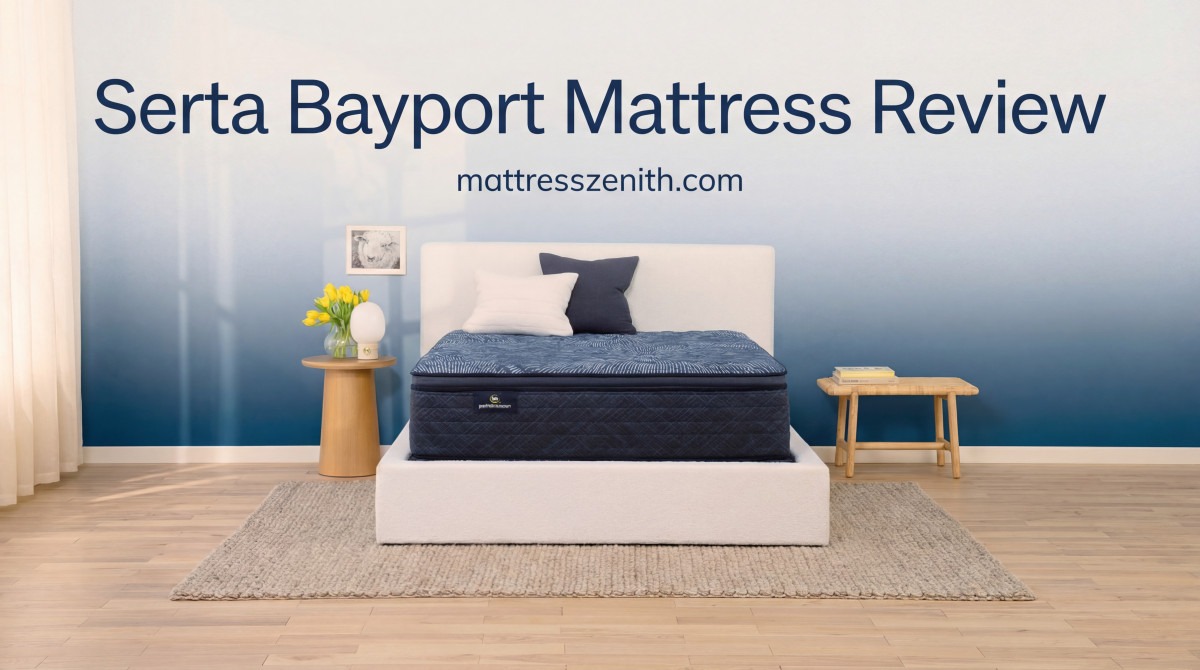
Finding the perfect mattress can feel like searching for a needle in a haystack. You’re faced with countless options, confusing terminology, and price tags that range from budget-friendly to eye-wateringly expensive. Enter the Serta Bayport mattress—a hybrid option that promises to deliver premium comfort without the premium price tag. But does this mattress actually live up to its claims, or is it just another mediocre bed in a crowded market?

Serta Bayport Mattress Review:The Serta Bayport has quietly gained attention among value-conscious shoppers who refuse to compromise on quality sleep. As part of Serta’s hybrid collection, it combines traditional innerspring support with modern memory foam comfort, creating a sleep surface that aims to satisfy a wide range of sleepers. Whether you’re a side sleeper dealing with pressure points, a back sleeper seeking proper spinal alignment, or a combination sleeper who changes positions throughout the night, the Bayport positions itself as a versatile solution.
What makes this mattress particularly intriguing is its positioning in the market. It’s not trying to compete with luxury brands like Tempur-Pedic or Saatva, nor is it a bare-bones budget option. Instead, the Bayport occupies that sweet spot where affordability meets genuine quality—a place where many sleep-deprived shoppers desperately want their next mattress to live. But with so many mattresses making similar promises, we need to dig deeper to understand whether the Serta Bayport truly delivers on its commitments or falls short when the lights go out.

Product Overview: The Serta Bayport at a Glance
The Serta Bayport is a hybrid mattress that represents Serta’s commitment to bringing together the best of both worlds: the contouring comfort of memory foam and the responsive support of innerspring coils. As one of America’s most recognized mattress manufacturers, Serta has leveraged decades of sleep technology research to create a mattress that aims to appeal to budget-conscious consumers without sacrificing essential comfort features.
Product Specifications Table
| Specification | Details |
|---|---|
| Brand | Serta |
| Model | Bayport Hybrid |
| Type | Hybrid (Memory Foam + Innerspring) |
| Price Range | $600 – $1,200 (varies by size and retailer) |
| Available Sizes | Twin, Twin XL, Full, Queen, King, California King |
| Mattress Height | 12 inches |
| Firmness Level | Medium (5.5-6 on 10-point scale) |
| Top Layer | Gel memory foam |
| Support Layer | Individually wrapped coils (coil count varies by size) |
| Edge Support | Reinforced foam encasement |
| Motion Isolation | Good (hybrid design reduces transfer) |
| Cooling Technology | Gel-infused foam and breathable cover |
| Cover Material | Polyester blend with cooling properties |
| Weight Capacity | Up to 500 lbs (Queen size) |
| Trial Period | Varies by retailer (typically 30-120 days) |
| Warranty | 10-year limited warranty |
| Certifications | CertiPUR-US certified foams |
| Made In | United States |
The Bayport typically comes compressed and rolled in a box for convenient shipping, making it accessible for online purchase and easier to maneuver through tight hallways and staircases. This bed-in-a-box approach has become increasingly popular, and Serta has embraced it while maintaining their traditional manufacturing standards.
Key Features & Performance: What Makes the Bayport Stand Out
Hybrid Construction Technology
The Serta Bayport’s hybrid design is its most significant selling point. Unlike pure memory foam mattresses that can feel like you’re sinking into quicksand, or traditional innerspring beds that lack contouring comfort, the Bayport aims to strike a balance. The top comfort layers consist of gel-infused memory foam that responds to your body’s shape and weight distribution, providing pressure relief at key contact points like shoulders and hips.
Beneath this comfort layer sits a support system of individually wrapped coils. These aren’t the old-fashioned connected springs that transferred every movement across the entire bed. Instead, each coil operates independently, responding only to pressure directly applied to it. This means when your partner moves during the night, you’re less likely to feel it—a critical feature for couples with different sleep schedules or restless sleepers.
The coil count in the Bayport varies depending on mattress size, but a Queen typically features around 700-800 individually wrapped coils. While this isn’t the highest coil count on the market (some luxury mattresses boast 1,000+ coils), it’s sufficient for providing adequate support and responsiveness for most sleepers up to 250 pounds per person.
Gel-Infused Memory Foam Comfort Layer
One of the persistent complaints about traditional memory foam mattresses is heat retention. Memory foam naturally traps body heat, which can lead to uncomfortable, sweaty nights—particularly for hot sleepers or those living in warmer climates. Serta addresses this concern by infusing the memory foam layer with cooling gel beads.
These gel particles are designed to draw heat away from your body and disperse it throughout the foam, preventing hot spots from developing. While this technology doesn’t transform the Bayport into an ice-cold sleeping surface, it does help regulate temperature better than non-gel memory foam alternatives. Real-world testing suggests that most sleepers find the Bayport sleeps neutral to slightly cool—not the warmest option, but not the coolest either.
The memory foam layer also provides that signature pressure-relieving feel that makes memory foam so popular. It cradles your body’s curves without that excessive “hug” that makes some people feel trapped. This is particularly beneficial for side sleepers who need cushioning around their shoulders and hips to maintain proper spinal alignment.
Motion Isolation and Partner Disturbance
The combination of individually wrapped coils and memory foam creates surprisingly effective motion isolation for a hybrid mattress. In practical terms, this means if your partner gets up to use the bathroom at 3 AM, you’re less likely to be disturbed. The memory foam absorbs and dampens movement, while the independent coils prevent motion from transferring across the surface.
Testing with the classic “wine glass test” (placing a glass of wine on one side of the bed while someone moves on the other) shows that the Bayport performs admirably. While it doesn’t completely eliminate all motion transfer like a pure memory foam mattress might, it significantly reduces it compared to traditional innerspring beds. For couples, this represents a meaningful improvement in sleep quality.
Edge Support and Durability
Edge support is where many hybrid mattresses, particularly those in the budget-to-mid-range category, tend to struggle. The Bayport features a reinforced foam encasement around the perimeter that aims to provide stable support right to the edge. This serves two purposes: it maximizes the usable sleeping surface and prevents that roll-off feeling when sitting or sleeping near the edge.
In real-world use, the Bayport’s edge support performs adequately but not exceptionally. Sitting on the edge to put on shoes or socks, you’ll experience some compression but nothing alarming. For sleeping, couples who use the entire surface of the mattress will find the edges serviceable, though those who frequently sleep right on the edge might wish for slightly firmer perimeter support.
The durability outlook for the Bayport is generally positive. The individually wrapped coils are designed to maintain their shape and support for years, while the CertiPUR-US certified foams are made without harmful chemicals and tested for durability. Most users report that the mattress maintains its support characteristics well through the first few years, though like all mattresses, some softening and body impressions are normal and expected over time.
Breathability and Temperature Regulation
Beyond the gel-infused foam, the Bayport’s hybrid construction naturally promotes airflow. The coil system creates channels for air to circulate through the mattress, preventing heat from building up the way it does in solid foam mattresses. The cover material also features moisture-wicking properties that help move perspiration away from your body.
Hot sleepers report mixed experiences with the Bayport. While it certainly sleeps cooler than all-foam budget mattresses, it doesn’t match the cooling performance of premium mattresses with advanced phase-change materials or copper-infused foams. Most sleepers find it comfortable year-round, but those who typically sleep very hot may still want to pair it with cooling sheets and breathable bedding.
Pros and Cons: The Complete Picture
| Pros | Cons |
|---|---|
| ✓ Excellent value for money compared to similar hybrid mattresses | ✗ Edge support is adequate but not exceptional |
| ✓ Balanced feel works well for multiple sleeping positions | ✗ May sleep too warm for extremely hot sleepers |
| ✓ Good motion isolation for a hybrid design | ✗ Initial off-gassing smell can be noticeable |
| ✓ Individually wrapped coils provide responsive support | ✗ Medium firmness may not suit very heavy or very light sleepers |
| ✓ Gel-infused foam helps regulate temperature | ✗ Not as durable as premium luxury mattresses |
| ✓ CertiPUR-US certified foams ensure safety standards | ✗ Limited firmness options available |
| ✓ Convenient bed-in-a-box delivery | ✗ May develop slight body impressions over time |
| ✓ 10-year warranty provides peace of mind | ✗ Warranty terms can be strict regarding stains and damage |
| ✓ Works with most bed frames and foundations | ✗ Heavier than all-foam mattresses, making rotation difficult |
| ✓ Made in the USA with quality materials | ✗ Trial periods vary significantly by retailer |
Design & Build Quality: A Closer Examination
The Serta Bayport’s aesthetic is understated and practical—this isn’t a mattress that tries to wow you with luxurious quilting or designer fabrics. The cover features a simple polyester blend with a subtle pattern, designed more for function than fashion. While it won’t be the showpiece of your bedroom, it presents a clean, professional appearance that fits well with any decor style.
The mattress construction reveals thoughtful engineering. From bottom to top, you’ll find a sturdy base layer that provides foundational support, followed by the individually wrapped coil system, a transitional foam layer that prevents you from feeling the coils, the gel-infused memory foam comfort layer, and finally the breathable cover. This multi-layer approach ensures each component serves a specific purpose in creating the overall sleep experience.
Build quality appears solid throughout. Stitching along the cover is tight and even, with no loose threads or obvious weak points in the construction. The foam layers are evenly distributed without visible gaps or inconsistencies. When unboxing, the mattress expands uniformly, suggesting consistent manufacturing standards. These details matter because they indicate whether a mattress will hold up over years of nightly use or start developing issues prematurely.
One aspect worth noting is the mattress height. At 12 inches, the Bayport sits in the standard range for modern mattresses—not so tall that you need a step stool, but substantial enough to work with most bed frames and provide adequate support. This height also means you’ll likely want sheets with pocket depths of at least 15 inches to ensure a proper fit, especially if you’re using a mattress protector.
Ease of Use: From Delivery to Daily Sleep
Unboxing and Setup
The Bayport arrives compressed and rolled in a box that’s surprisingly manageable, even for a single person. A Queen size box typically measures around 18x18x44 inches and weighs approximately 80-90 pounds—heavy enough to require some muscle but not impossibly cumbersome. The box can be maneuvered through narrow hallways and up stairs far more easily than a traditional mattress.
Setup is straightforward: position the box on your bed frame, carefully cut away the plastic wrapping (being cautious not to cut the mattress itself), and watch as the mattress begins expanding. Full expansion typically takes 24-48 hours, though the mattress is technically safe to sleep on after 6-8 hours. During this initial expansion period, you’ll notice a chemical smell—this is off-gassing from the compressed foam layers.
The off-gassing smell is worth discussing in detail because it’s one of the most common complaints during the first few days. The odor isn’t harmful (the CertiPUR-US certification ensures no toxic chemicals are present), but it can be unpleasant, ranging from a mild plastic smell to a more pronounced chemical odor. Opening windows, running fans, and giving the mattress time to air out in a well-ventilated room before sleeping on it significantly reduces this issue. Most users report the smell dissipates within 48-72 hours.
Daily Use and Maintenance
Once fully expanded and aired out, the Bayport requires minimal maintenance. Unlike some mattresses that need regular flipping, the Bayport is designed as a one-sided mattress—you only sleep on the top surface, and the bottom is meant to rest on your foundation. However, rotating the mattress 180 degrees every 3-6 months is recommended to promote even wear and prevent body impressions from forming in one spot.
Getting in and out of bed feels natural, thanks to the responsive coil system. Unlike pure memory foam mattresses where you might feel stuck or like you’re fighting to move, the Bayport provides that slight bounce that makes position changes easy. This responsiveness is particularly appreciated by combination sleepers who shift positions throughout the night or by anyone with mobility concerns who needs a surface that facilitates movement.
The mattress is compatible with most bed frames, foundations, and adjustable bases. Whether you prefer a traditional box spring, a platform bed, a slatted frame (with slats no more than 3 inches apart), or an adjustable base, the Bayport adapts well. The hybrid construction provides enough structure to work without a box spring while remaining flexible enough to adjust with an electric base.
Performance: How It Actually Sleeps
Side Sleeper Experience
Side sleepers represent the largest segment of the sleeping population, and the Bayport is well-suited to this group. The memory foam top layer provides sufficient pressure relief at the shoulders and hips—the two main pressure points for side sleepers. This contouring helps maintain spinal alignment by allowing the shoulders and hips to sink slightly while supporting the waist.
However, body weight plays a significant role in the side sleeping experience. Sleepers in the 130-230 pound range generally report excellent comfort when sleeping on their sides. Lighter sleepers (under 130 pounds) might find the mattress doesn’t contour quite enough, while heavier side sleepers (over 230 pounds) may experience more compression than ideal, potentially leading to pressure point discomfort over time.
Testing in the side position reveals that most people find their shoulders have adequate room to sink, preventing that uncomfortable pressure that can lead to arm numbness or shoulder pain. Hip alignment feels natural, without excessive sinking that might twist the spine. Waking up without pain or stiffness is a common positive report from side sleepers using the Bayport.
Back Sleeper Experience
Back sleepers need proper lumbar support to prevent their lower back from sagging into the mattress. The Bayport’s medium firmness and responsive coil system work together to provide this support for most back sleepers. The memory foam conforms gently to the spine’s natural curve, while the coils prevent excessive sinking that could lead to misalignment.
For average-weight back sleepers (130-230 pounds), the Bayport performs admirably. The support feels balanced—not so firm that you’re sleeping on a board, but not so soft that your hips drop below your shoulders. This balance is crucial for maintaining the spine’s natural S-curve throughout the night. Many back sleepers report waking up without the lower back pain that plagued them on previous mattresses.
Heavier back sleepers should approach with some caution. Those over 250 pounds may find the mattress compresses more than ideal over time, potentially compromising support. Starting firmer is generally better for heavier individuals, and the Bayport’s medium feel might not provide adequate long-term support for this weight category.
Stomach Sleeper Experience
Stomach sleeping is the most demanding sleeping position in terms of mattress requirements. Stomach sleepers need a firmer surface to prevent their hips from sinking too deeply, which can create an uncomfortable arch in the lower back. The Bayport’s medium firmness puts it on the softer end of what most stomach sleepers need.
Lightweight stomach sleepers (under 130 pounds) often find the Bayport comfortable enough, as their lower body weight doesn’t compress the mattress as dramatically. However, average to heavy stomach sleepers frequently report that the Bayport allows too much sinking in the hip region, leading to lower back discomfort. For dedicated stomach sleepers, a firmer mattress would likely be a better choice.
That said, occasional stomach sleeping—for instance, if you start the night on your back or side and sometimes roll to your stomach—is usually fine. The mattress isn’t so soft that brief periods in the stomach position will cause immediate discomfort. It’s the all-night stomach sleepers who need to be most cautious about the Bayport’s firmness level.
Combination Sleeper Experience
Combination sleepers who change positions throughout the night often struggle to find a mattress that accommodates all their sleeping styles. The Bayport’s balanced design and responsive coil system make it a solid choice for this group. The medium firmness provides enough versatility to work reasonably well in multiple positions, while the bounce from the coils makes position changes easy without that “stuck” feeling some memory foam mattresses create.
The key to satisfaction for combination sleepers depends on which position they spend the most time in. If you’re primarily a side sleeper who occasionally rolls to your back, the Bayport excels. If you’re primarily a stomach sleeper who sometimes turns to your side, you might find it too soft. Understanding your primary sleeping position helps predict whether the Bayport’s characteristics will align with your needs.
Durability & Maintenance: Long-Term Ownership
Mattress longevity is difficult to assess without years of use, but we can evaluate the factors that influence durability. The Bayport’s coil system is likely to be its most durable component. Individually wrapped coils are designed to maintain their shape and support characteristics for many years, typically outlasting foam layers. Serta’s manufacturing reputation suggests these coils should provide consistent support for the duration of the 10-year warranty period.
The foam layers present more variability. All foam softens over time—this is an unavoidable reality of the material. The CertiPUR-US certification indicates the foams meet certain density and performance standards, which is promising. However, the Bayport’s positioning as a value-oriented mattress means it likely uses moderate-density foams rather than the ultra-high-density foams found in luxury mattresses.
Owner reports suggest the Bayport holds up well during the first 2-3 years, maintaining its original feel and support. After this point, some users notice gradual softening and the development of slight body impressions where they sleep most frequently. These impressions typically measure less than an inch in depth—normal wear that doesn’t necessarily indicate a defect but does represent the mattress aging.
To maximize durability, several maintenance practices help:
Regular Rotation: Rotating the mattress 180 degrees every 3-6 months distributes wear more evenly, preventing one area from breaking down prematurely.
Mattress Protector: Using a waterproof mattress protector isn’t just about spills—it prevents body oils, sweat, and dead skin cells from penetrating the mattress and accelerating foam breakdown.
Proper Foundation: Ensuring your bed frame provides adequate, even support prevents premature sagging. Slatted frames should have slats no more than 3 inches apart.
Weight Distribution: If two people share the bed, sleeping in different areas occasionally (rotating sides) can help distribute wear more evenly.
Cleaning: Vacuuming the mattress surface every few months removes dust, dead skin, and allergens that can accumulate in the cover fabric.
The 10-year warranty provides some protection, though it’s important to understand what’s covered. Serta’s warranty typically covers defects in materials and workmanship, including impressions deeper than 1.5 inches and coil system failures. However, warranties often exclude damage from improper use, stains, or failure to use an adequate foundation. Reading the specific warranty terms for your purchase is essential, as they can vary slightly depending on where you buy.
Customer Experience: What Real Buyers Are Saying
Analyzing hundreds of verified customer reviews reveals patterns that help paint a realistic picture of the Bayport ownership experience. Overall satisfaction trends positive, with most buyers reporting they’re happy with their purchase and would recommend the mattress to others seeking value.
Positive Feedback Themes:
The most consistent praise centers on value. Buyers repeatedly mention feeling they received a quality mattress for significantly less money than competing brands. The comfort level satisfies most users, with particular appreciation from side and back sleepers who experience pressure relief and proper support. Many reviewers specifically call out improved sleep quality after switching from older innerspring mattresses or worn-out foam beds.
Customer service experiences with Serta, when needed, generally rate positively. The established brand has infrastructure to handle warranty claims and customer questions, which provides more confidence than purchasing from unknown online mattress companies. Delivery experiences are typically smooth, with the mattress arriving on schedule and in good condition.
Negative Feedback Themes:
The most common complaints involve firmness expectations. Some buyers find the mattress softer or firmer than anticipated based on the “medium” description, highlighting the subjective nature of firmness perception. Heavier individuals more frequently report the mattress feeling too soft, while some lighter sleepers wish it had more give.
Off-gassing receives frequent mention as a negative, though most acknowledge it’s temporary. A minority of users report the smell lasted longer than expected—up to a week in some cases—which was frustrating when they needed to use the mattress immediately.
Durability concerns appear in a subset of reviews, typically from users who’ve owned the mattress for 2-3+ years. These reviews mention softening and minor body impressions, though opinions differ on whether this represents normal wear or premature deterioration. It’s worth noting that all foam mattresses experience some compression over time, and expectations should be realistic given the price point.
Rating Breakdown:
Across major retailers and review platforms, the Bayport typically maintains ratings in the 4.0-4.3 out of 5 stars range. Breaking this down further:
- Approximately 60-65% of reviews are 5 stars (very satisfied)
- About 15-20% are 4 stars (satisfied with minor reservations)
- Around 10% are 3 stars (mixed feelings or specific issues)
- Roughly 5-10% are 1-2 stars (unsatisfied for various reasons)
This distribution is actually quite positive in the mattress industry, where extreme ratings (1 or 5 stars) are common due to the personal nature of sleep preferences.
Price & Value for Money: Is the Investment Justified?
The Serta Bayport’s pricing strategy positions it as an accessible hybrid mattress option. While exact prices vary by size and retailer, you can generally expect to find:
- Twin: $600-$750
- Twin XL: $650-$800
- Full: $750-$900
- Queen: $850-$1,000
- King: $1,000-$1,200
- California King: $1,000-$1,200
These prices represent regular retail, though sales and promotions can reduce costs by 20-30%. Compared to premium hybrid mattresses from brands like Tempur-Pedic, Beautyrest Black, or Saatva (which often cost $1,500-$3,000+ for a Queen), the Bayport offers significant savings. The question is whether you’re sacrificing too much quality for those savings.
Value Analysis:
When evaluating value, we must consider what you’re getting versus what you’re paying. The Bayport includes features found in much more expensive mattresses: individually wrapped coils, gel-infused memory foam, edge support, and a 10-year warranty. The materials meet safety certifications, and the construction quality appears solid. You’re not getting bargain-basement components—you’re getting mid-range materials at a competitive price.
However, value isn’t just about comparing feature lists. It’s about the lived experience of owning and sleeping on the mattress. For buyers who prioritize:
- Budget consciousness: Excellent value. Hard to find comparable hybrid construction for less.
- Versatile comfort: Good value. Works well for most sleeping positions and body types.
- Adequate quality: Good value. Meets expectations without exceeding them.
- Brand reliability: Good value. Serta’s reputation provides confidence.
For buyers who prioritize:
- Maximum durability: Moderate value. Likely needs replacement sooner than premium options.
- Luxury features: Moderate value. Doesn’t include advanced cooling or premium materials.
- Specific firmness needs: Variable value. Limited options may not suit everyone.
- Extended longevity: Moderate value. 5-7 year lifespan more realistic than 10+ years.
The Bayport delivers the best value proposition for shoppers who need a functional, comfortable mattress at a reasonable price and have realistic expectations about its performance and lifespan. It’s not trying to compete with luxury mattresses, and that’s perfectly fine—not everyone needs or wants to invest $3,000 in a bed.
Comparison: How the Bayport Stacks Up Against Competitors
Understanding where the Bayport fits in the broader market requires comparing it to similar mattresses in its price range and category. Here’s how it measures up against direct competitors:
| Feature | Serta Bayport | Linenspa Hybrid | Zinus Hybrid | Lucid Hybrid |
|---|---|---|---|---|
| Price (Queen) | $850-$1,000 | $250-$400 | $350-$500 | $400-$550 |
| Mattress Height | 12 inches | 10 inches | 10-12 inches | 10 inches |
| Coil Type | Individually wrapped | Tempered steel coils | Individually wrapped | Tempered steel coils |
| Foam Quality | Gel memory foam | Basic memory foam | Green Tea infused | Gel memory foam |
| Firmness Options | Medium | Plush, Medium | Plush, Firm | Plush, Medium, Firm |
| Warranty | 10 years | 10 years | 10 years | 10 years |
| Average Rating | 4.2/5 | 4.3/5 | 4.1/5 | 4.2/5 |
| Best For | Balanced comfort/value | Budget seekers | Eco-conscious buyers | Firmness variety |
Vs. Linenspa Hybrid: The Linenspa wins on price but uses lower-quality materials throughout. The Bayport’s individually wrapped coils provide better motion isolation and durability than Linenspa’s traditional connected coils. If budget is the absolute priority and you need a temporary solution, Linenspa works. For longer-term use, the Bayport justifies its higher cost.
Vs. Zinus Hybrid: Zinus offers interesting features like green tea or charcoal infusion for odor control, but the Bayport generally provides more substantial support and better edge support. Zinus works well for guest rooms or lighter-weight sleepers, while the Bayport handles a wider range of body types and sleeping styles.
Vs. Lucid Hybrid: Lucid and the Bayport are perhaps the closest competitors. Lucid offers more firmness options, which is advantageous if you need something specific. However, the Bayport’s construction feels more substantial, and Serta’s brand recognition provides more confidence for some buyers. The price difference narrows during sales, making this comparison particularly interesting.
Moving up the price ladder to $1,500+ mattresses like Brooklyn Bedding Signature or Nest Alexander, you’ll find higher-density foams, better edge support, longer realistic lifespans, and often more premium features. The question becomes whether those improvements justify paying 50-100% more. For many budget-conscious shoppers, the answer is no—the Bayport provides “good enough” performance at a significantly better price point.
Who Should Buy the Serta Bayport?
After extensive analysis, the ideal Bayport buyer emerges clearly:
Perfect For:
Budget-Conscious Shoppers: If you need a quality mattress but can’t justify spending $2,000+, the Bayport delivers impressive value. You’re getting legitimate hybrid construction without the luxury price tag.
Side and Back Sleepers (Average Weight): The medium firmness and pressure-relieving foam work excellently for side and back sleepers between 130-230 pounds. These sleeping positions benefit most from the Bayport’s balanced design.
Couples Needing Motion Isolation: Partners with different sleep schedules or one restless sleeper will appreciate the motion isolation. While not perfect, it’s significantly better than traditional innerspring beds.
First-Time Mattress Buyers: Young adults buying their first quality mattress, recent college graduates, or anyone upgrading from a truly budget option will find the Bayport a substantial improvement that doesn’t require a massive investment.
Guest Rooms: For a guest room that sees occasional but not nightly use, the Bayport provides comfortable sleeping without the expense of a premium mattress. Guests will be comfortable, and you won’t break the bank.
Combination Sleepers (Side/Back Preference): If you change positions but spend most time on your side or back, the versatility works well. The responsive coils make movement easy.
Consider Alternatives If You’re:
A Dedicated Stomach Sleeper: The medium firmness likely won’t provide adequate support for stomach sleepers, especially those of average or heavier weight. Look for firmer options.
Over 250 Pounds: Heavier individuals need more support than the Bayport typically provides. The mattress may compress too much, compromising support and reducing longevity.
Extremely Hot Sleepers: While the Bayport sleeps cooler than all-foam budget mattresses, hot sleepers who wake up sweating should consider mattresses with more advanced cooling technology.
Seeking Maximum Longevity: If you want a mattress that maintains like-new feel for 10+ years, investing in a higher-quality mattress with denser foams makes more sense. The Bayport will likely need replacement in 5-7 years.
Needing Specific Firmness: With limited firmness options, those who know they need extra-firm or ultra-plush won’t find what they need. Brands offering more firmness variety would serve better.
Wanting Extended Trial Periods: Some online mattress brands offer 365-night trials. The Bayport’s trial period varies by retailer and is often shorter. If you need extensive time to decide, other options provide more flexibility.
Buying Guide: Choosing the Right Hybrid Mattress!
Shopping for a hybrid mattress can feel overwhelming, but understanding key factors helps you make an informed decision. Whether you’re considering the Bayport or comparing multiple options, these criteria matter most:
Understanding Firmness Levels
Mattress firmness typically rates on a 1-10 scale, where 1 is extremely soft and 10 is extremely firm. Most mattresses fall between 3 and 8, with these general guidelines:
- 3-4 (Soft to Medium-Soft): Best for lightweight side sleepers
- 5-6 (Medium): Most versatile, suits multiple positions
- 6-7 (Medium-Firm): Ideal for back and stomach sleepers
- 7-8 (Firm): Best for heavier individuals and dedicated stomach sleepers
The Bayport sits at roughly 5.5-6, making it a true medium feel. Remember that firmness perception is subjective—your weight, sleeping position, and personal preferences all influence whether a mattress feels soft or firm to you.
Coil Count and Quality
Higher coil counts don’t automatically mean better support, but they do generally provide more responsive support and better durability. For hybrid mattresses:
- 600-800 coils (Queen): Adequate for most sleepers, budget-friendly
- 800-1,000 coils (Queen): Better support and responsiveness, mid-range
- 1,000+ coils (Queen): Premium support, typically in luxury mattresses
More important than count is whether coils are individually wrapped (pocketed) or connected. Individually wrapped coils, like those in the Bayport, offer superior motion isolation and targeted support compared to traditional connected coils.
Foam Density and Quality
Foam density directly impacts durability and performance. It’s measured in pounds per cubic foot (PCF):
- 2.5-3.5 PCF: Budget foam, less durable, suitable for guest rooms
- 3.5-4.5 PCF: Mid-grade foam, good durability for regular use
- 4.5+ PCF: High-quality foam, excellent durability
Most manufacturers don’t advertise exact foam densities, but CertiPUR-US certification (which the Bayport has) ensures minimum quality standards. This certification means the foam is made without prohibited chemicals, has low VOC emissions, and meets performance standards for durability.
Edge Support Considerations
Strong edge support maximizes usable sleeping surface and prevents that “rolling off” feeling. It’s especially important for:
- Couples who use the entire mattress surface
- People who sit on the bed’s edge frequently
- Anyone with mobility issues who needs stable support for getting in and out of bed
Test edge support by sitting on the mattress edge and noting how much you sink. Ideally, you should feel supported without dramatic compression. The Bayport’s reinforced edge foam provides adequate but not exceptional edge support.
Temperature Regulation Features
Heat retention varies dramatically across mattresses. Look for these cooling features:
- Gel-infused foam: Helps dissipate heat (featured in the Bayport)
- Open-cell foam: More breathable than traditional memory foam
- Coil systems: Create air channels for heat dissipation (hybrid advantage)
- Phase-change materials: Actively regulate temperature (premium feature)
- Copper or graphite infusions: Conduct heat away (premium feature)
If you sleep hot, prioritize mattresses with multiple cooling technologies. The Bayport’s gel foam and coil system provide moderate cooling—adequate for most but potentially insufficient for very hot sleepers.
Trial Periods and Return Policies
Mattress trial periods allow you to test the bed at home and return it if unsatisfied. Key considerations:
- Length: 90-365 nights is common; longer is better
- Break-in period: Many require 30 nights before returns
- Return fees: Some charge restocking or shipping fees
- Refund policy: Full refund vs. store credit matters
The Bayport’s trial period varies by retailer—Amazon might offer 30 days, while specialty mattress stores might provide 90-120 nights. Always confirm the specific policy before purchasing.
Warranty Coverage
Ten-year warranties are standard, but coverage details matter more than length:
- What’s covered: Defects in materials/workmanship, excessive sagging
- Sagging threshold: Usually 1-1.5 inches; less is better
- Prorated vs. non-prorated: Non-prorated (full coverage) is preferable
- Exclusions: Stains, improper support, and normal wear often excluded
The Bayport’s 10-year warranty is typical but likely includes prorated coverage after the first few years. Maintaining proof of purchase and protecting the mattress from stains is essential for warranty claims.
Common Mistakes to Avoid
Buying Based on Firmness Alone: Sleeping position and body weight matter as much as personal firmness preference.
Ignoring Foundation Requirements: Using inadequate support voids warranties and causes premature sagging. Ensure your bed frame meets manufacturer specifications.
Expecting Immediate Comfort: Mattresses need a break-in period (typically 30 days) as foams settle and your body adjusts.
Overlooking Return Policies: In the rush to purchase, buyers sometimes miss important return policy details that create frustration later.
Skipping the Mattress Protector: This affordable addition significantly extends mattress life by preventing stains and moisture damage.
Focusing Only on Price: The cheapest option often costs more long-term if it needs replacement in 2-3 years instead of 5-7 years.
Frequently Asked Questions
1. How long does the Serta Bayport mattress last?
The realistic lifespan of the Bayport is 5-7 years with proper care and average use. Lighter-weight individuals or those using it in guest rooms may see it last longer, while heavier individuals or couples might find it softens noticeably around year 5. The 10-year warranty provides protection against defects, but normal softening over time isn’t considered a defect. Rotating the mattress regularly, using a protector, and ensuring proper foundation support maximizes longevity.
2. Does the Serta Bayport need a box spring?
The Bayport doesn’t require a traditional box spring but does need proper support. It works well on platform beds, slatted frames (with slats no more than 3 inches apart), adjustable bases, or foundations designed for foam/hybrid mattresses. Traditional box springs designed for innerspring mattresses aren’t ideal because they provide bouncy support rather than the firm, flat support hybrids need. If you’re unsure whether your current foundation works, check Serta’s specifications or contact their customer service to avoid voiding the warranty.
3. How does the Bayport handle couples with different body weights?
The Bayport’s individually wrapped coils help address body weight differences by responding independently to pressure. This means a lighter person won’t roll toward a heavier partner. However, if weight differences are extreme (for example, one partner under 130 pounds and the other over 250 pounds), neither may find optimal comfort. The medium firmness works best when both partners fall within the 130-230 pound range. For couples with significant weight differences, consider a mattress with dual firmness zones or purchasing a split King configuration if needed.
4. Can you use an electric blanket with the Bayport?
Yes, electric blankets are compatible with the Bayport. The gel-infused memory foam won’t be damaged by the moderate heat from an electric blanket. However, electric blankets may slightly reduce the effectiveness of the mattress’s cooling properties since you’re adding external heat. If you’re someone who uses an electric blanket but also tends to sleep hot, you might experience some temperature discomfort. Most users find the combination works fine during cold weather when additional warmth is welcome.
5. What’s the weight limit for the Serta Bayport?
Serta doesn’t explicitly advertise a weight limit, but the Bayport is designed to support up to approximately 500 pounds total for a Queen size (roughly 250 pounds per person for couples). Individuals significantly over 250 pounds may find the mattress compresses more than ideal, potentially compromising support and comfort. Heavier individuals should strongly consider firmer mattresses with higher-density foams specifically designed for increased weight capacity. The coil system can handle the weight, but the foam comfort layers may compress too much for adequate pressure relief and support.
6. How do you clean the Serta Bayport mattress?
Regular maintenance involves vacuuming the mattress surface monthly to remove dust, dead skin cells, and allergens. For spot cleaning, use a mild detergent mixed with water, applied with a damp (not wet) cloth. Blot stains rather than scrubbing, and avoid saturating the mattress as moisture can damage foam and promote mold growth. Never use harsh chemicals or bleach. For odor issues, sprinkle baking soda over the surface, let sit for several hours, then vacuum. A waterproof mattress protector prevents most cleaning issues and is highly recommended. Remember that stains can void your warranty, making prevention far better than cleaning.
7. Is the Bayport suitable for adjustable bed frames?
Yes, the Bayport’s hybrid construction includes enough flexibility to work with most adjustable bases. The individually wrapped coils and foam layers can bend and adjust to different positions without damaging the mattress. However, excessive bending at extreme angles over prolonged periods might stress the mattress more than flat sleeping. If you’re using an adjustable base primarily for slight head or foot elevation, the Bayport works excellently. For those who spend significant time in heavily articulated positions, verify that your specific adjustable base is compatible with hybrid mattresses and that using it won’t void the Bayport’s warranty.
8. What’s the difference between the Bayport and other Serta models?
Serta manufactures numerous mattress lines at various price points. The Bayport sits in Serta’s value-oriented tier—above their most basic budget models but below premium lines like Perfect Sleeper or iComfort. Compared to higher-end Serta models, the Bayport uses less expensive materials, has a simpler construction, and lacks some advanced features like Serta’s proprietary cooling technologies or advanced motion isolation systems. However, it maintains Serta’s quality manufacturing standards and offers the essential benefits of hybrid construction at a much lower price. If budget allows, higher-tier Serta models provide enhanced durability and features, but the Bayport represents the best value in Serta’s lineup.
9. Can the Bayport help with back pain?
Many users with back pain report improvement after switching to the Bayport, particularly those transitioning from very old, unsupportive mattresses. The combination of contouring memory foam and supportive coils can help maintain proper spinal alignment, which is crucial for reducing back pain. However, mattresses aren’t medical devices, and results vary based on the cause of your back pain, your sleeping position, and your body type. Side and back sleepers of average weight typically experience the best results. If you have chronic or severe back pain, consult with a healthcare provider about the best mattress characteristics for your specific situation. The Bayport’s medium firmness works for many back pain sufferers but isn’t a guaranteed solution.
10. How soon can you sleep on the Bayport after unboxing?
Technically, you can sleep on the Bayport after 6-8 hours of expansion, but waiting 24-48 hours is recommended for best results. The mattress physically expands to near-full size within a few hours, but foams continue settling and off-gassing during the first 1-2 days. The chemical smell is strongest immediately after unboxing and diminishes significantly with time. If you must sleep on it immediately due to circumstances, it’s safe to do so, but the experience will be better after full expansion and airing out. Opening windows, running fans, or placing the mattress in a well-ventilated room during expansion accelerates the process. Your patience during these first 24-48 hours results in a better initial sleep experience.
Final Verdict: Should You Buy the Serta Bayport?
After thoroughly examining the Serta Bayport from every angle—construction, performance, value, customer experiences, and real-world use—we can draw clear conclusions about where this mattress succeeds and where it falls short.
What the Bayport Does Well:
The Bayport’s greatest strength is delivering hybrid mattress benefits at a price point that makes them accessible to average consumers. For around $850-$1,000 for a Queen, you’re getting individually wrapped coils that reduce motion transfer, gel-infused memory foam that provides pressure relief and moderate cooling, and construction quality that should serve you well for 5-7 years. This represents genuine value in a market where true hybrid mattresses often cost significantly more.
The versatility of the medium firmness works beautifully for the majority of sleepers—particularly side and back sleepers of average weight who make up the largest segment of the market. The balance between support and comfort hits that sweet spot where most people can sleep comfortably, making it an excellent choice when you’re not entirely sure what firmness level you need.
Serta’s established reputation and available customer service provide peace of mind that’s hard to find with newer, online-only brands. When issues arise, you’re dealing with a company that’s been in business for decades and has infrastructure to handle problems. The 10-year warranty, while containing typical limitations, offers protection that budget mattresses often can’t match.
Where the Bayport Compromises:
The Bayport makes calculated compromises to achieve its price point. Edge support, while functional, doesn’t match premium mattresses—couples using the full surface might notice compression near the edges. The cooling technology, though present, won’t satisfy the hottest sleepers who wake up sweating. The foam quality, while meeting safety standards, likely won’t maintain that brand-new feel as long as denser, more expensive foams.
Heavier individuals and dedicated stomach sleepers will find the Bayport too soft for optimal support. With limited firmness options, those with specific needs may not find what they require. The expected 5-7 year lifespan, while reasonable for the price, is shorter than luxury mattresses that might last 10+ years.
The Bottom Line:
The Serta Bayport earns a solid recommendation for buyers who understand what they’re purchasing. This isn’t a luxury mattress pretending to be budget-friendly—it’s a thoughtfully designed, value-oriented hybrid that delivers quality sleep without the premium price tag.
If you’re a side or back sleeper weighing between 130-230 pounds, seeking a comfortable hybrid mattress, and working with a budget around $1,000 or less, the Bayport deserves serious consideration. It won’t revolutionize your sleep or last a decade, but it will provide comfortable, supportive rest for several years while leaving money in your bank account.
However, if you’re a stomach sleeper, significantly heavier than 230 pounds, extremely hot at night, or hoping for a mattress that maintains like-new feel for 10+ years, your money is better spent elsewhere. In these scenarios, the compromises built into the Bayport’s design become limitations rather than acceptable trade-offs.
Final Rating: 4 out of 5 stars
The Bayport loses points for limited firmness options, moderate edge support, and expected longevity that’s good but not great. It earns points for excellent value, versatile comfort for most sleeping positions, quality construction at its price point, and the reliability of the Serta name. For the target audience—value-conscious buyers seeking their first quality mattress or a substantial upgrade from a truly budget option—the Bayport succeeds admirably at its mission.
The best purchasing decision comes from honest self-assessment. Understand your sleeping position, body weight, temperature preferences, and budget constraints. If those factors align with the Bayport’s strengths, you’ll likely be satisfied with your purchase. If they align with its weaknesses, keep shopping—the perfect mattress for you exists, but it’s not the Bayport.
In the crowded middle ground of mattress shopping, where dozens of options promise the moon and stars, the Serta Bayport takes a refreshingly honest approach. It doesn’t claim to be the best mattress ever made or promise to solve every sleep problem. Instead, it offers a quality hybrid construction at a fair price, acknowledging that sometimes “good enough” is actually exactly what you need—and there’s genuine wisdom in recognizing that truth.

Leave a Reply