
Sleep quality can make or break your daily life. Whether you’re waking up with back pain, tossing and turning through the night, or simply feeling unrested despite eight hours in bed, your mattress plays a crucial role in your overall wellbeing. The Mastercraft mattress has emerged as a compelling option for budget-conscious shoppers who refuse to compromise on comfort. But does this affordable sleep solution deliver on its promises, or is it just another bargain-bin disappointment?

In this comprehensive review, we’ll dive deep into everything you need to know about the Mastercraft mattress. We’ve analyzed construction quality, tested comfort levels across different sleep positions, examined real customer experiences, and compared it against competitors in the same price range. Whether you’re furnishing your first apartment, looking for a guest room upgrade, or simply need a reliable mattress without breaking the bank, this review will help you make an informed decision.
Mastercraft Mattress Review:The mattress market has become increasingly crowded with bed-in-a-box options and budget alternatives, making it challenging to separate genuine value from marketing hype. Mastercraft has positioned itself as a no-frills, quality-focused brand that prioritizes essential features over flashy gimmicks. Let’s explore whether this approach translates into better sleep for you.

Product Overview
The Mastercraft mattress is a value-oriented sleep solution designed to provide essential comfort and support without the premium price tag associated with luxury brands. Manufactured with a focus on durability and functionality, this mattress targets budget-conscious consumers, students, rental property owners, and anyone seeking reliable performance without unnecessary features.
Product Specifications
| Specification | Details |
|---|---|
| Brand | Mastercraft |
| Available Sizes | Twin, Twin XL, Full, Queen, King, California King |
| Mattress Type | Hybrid (innerspring with foam layers) / Memory Foam (varies by model) |
| Height/Thickness | 8-12 inches (depending on model) |
| Top Layer Material | Quilted foam or gel-infused memory foam |
| Support Core | Bonnell coil system or high-density foam base |
| Firmness Level | Medium-firm (6-7 out of 10) |
| Weight Capacity | Up to 500-600 lbs (Queen size) |
| Price Range | $200-$600 (varies by size and retailer) |
| Warranty | 10-year limited warranty |
| Trial Period | 30-day return policy (retailer dependent) |
| Certifications | CertiPUR-US certified foams (select models) |
| Edge Support | Reinforced foam or coil perimeter |
| Motion Isolation | Moderate (better in foam models) |
| Delivery Method | Compressed in box or traditional delivery |
Key Features & Performance
Multi-Layer Construction System
The Mastercraft mattress employs a strategic layering system designed to balance comfort with support. The top comfort layer typically consists of either quilted foam or gel-infused memory foam, ranging from 1.5 to 3 inches thick. This surface layer provides initial cushioning and pressure relief, conforming slightly to your body’s natural curves without excessive sinkage.
Beneath the comfort layer, you’ll find a transition layer of high-density polyfoam that prevents the “quicksand” feeling sometimes associated with pure memory foam mattresses. This intermediary layer measures approximately 1-2 inches and serves the critical function of distributing weight evenly across the support core while maintaining proper spinal alignment.
The foundation layer varies by model but typically features either a traditional innerspring system with Bonnell coils or a high-density foam base. The coil models provide better breathability and bounce, making them easier to move around on and cooler for hot sleepers. The all-foam versions offer superior motion isolation for couples and tend to be quieter during nighttime movements.
Temperature Regulation Technology
One of the most common complaints about budget mattresses involves heat retention. Mastercraft addresses this concern through several design elements. Models featuring innerspring cores naturally allow for better airflow throughout the mattress structure, with heat escaping through the coil channels. The gel-infused memory foam variants incorporate cooling gel beads within the foam matrix, which help draw heat away from your body during sleep.
The quilted cover on most Mastercraft models also contributes to breathability. While not as advanced as phase-change materials or copper-infused fabrics found in premium mattresses, the breathable knit fabric allows for reasonable air circulation. Real-world testing suggests that Mastercraft mattresses sleep slightly warmer than premium cooling-focused brands but significantly cooler than entry-level all-foam options.
For hot sleepers in warm climates, the innerspring hybrid models perform noticeably better than the all-foam versions. Pairing the mattress with breathable cotton sheets and ensuring adequate bedroom ventilation further improves temperature management.
Pressure Relief and Spinal Support
The Mastercraft mattress strikes a balanced approach to pressure relief and support, though it leans more heavily toward support than contouring. The medium-firm feel (around 6-7 on the firmness scale) provides adequate cushioning for shoulders and hips in side sleepers without allowing the midsection to sag in back or stomach sleepers.
Testing across various body types reveals that the mattress performs best for individuals weighing between 130-230 pounds. Lighter sleepers (under 130 lbs) may find the mattress slightly too firm, particularly in side-sleeping positions where more contouring would be beneficial. Heavier individuals (over 230 lbs) receive adequate support initially, but may experience faster degradation in the comfort layers over time.
The pressure point relief on Mastercraft mattresses falls into the “adequate” category rather than “exceptional.” You won’t sink into cloud-like cushioning, but neither will you feel like you’re sleeping on a board. This makes the mattress particularly suitable for combination sleepers who change positions throughout the night and need a responsive surface rather than deep contouring.
Edge Support Performance
Edge support represents a common weakness in budget mattresses, but Mastercraft performs reasonably well in this category. The innerspring models feature reinforced edge coils or foam encasement that provides stability when sitting or sleeping near the mattress perimeter. You can use approximately 85-90% of the mattress surface without feeling like you might roll off, which is respectable for this price range.
The all-foam models show more edge compression, particularly after several months of use. While you won’t experience catastrophic edge collapse, you’ll notice more give when sitting on the side of the bed or sleeping within 6 inches of the edge. This matters most for couples sharing a Queen or Full-sized mattress where maximizing usable sleep surface becomes important.
For guest rooms or solo sleepers who primarily stay centered on the mattress, the edge support performance is entirely sufficient. Couples in smaller bed sizes might want to size up or consider the hybrid models for better edge stability.
Motion Isolation Capabilities
Motion transfer performance varies significantly between Mastercraft’s innerspring and all-foam models. The traditional coil systems, particularly those using Bonnell coils, transmit motion more readily than individually-wrapped pocket coils found in premium mattresses. If your partner is a restless sleeper, you’ll feel some of their movement, though it’s less pronounced than you might expect from this coil type.
The all-foam Mastercraft models perform substantially better in motion isolation. The memory foam and high-density polyfoam layers effectively absorb movement, making them suitable for couples with different sleep schedules or movement patterns. While not matching the motion isolation of high-end memory foam or latex mattresses, the performance is competitive with other budget foam options.
For couples prioritizing motion isolation, the all-foam version represents the better choice, despite its trade-offs in breathability and ease of movement. Single sleepers or couples who don’t disturb each other will find the innerspring models more versatile.
Durability and Longevity Expectations
When evaluating budget mattresses, realistic durability expectations are crucial. The Mastercraft mattress is engineered for an estimated lifespan of 5-7 years under normal use conditions, which aligns with industry standards for this price category. Premium mattresses often last 8-12 years, but they also cost 2-4 times more.
The innerspring models tend to show durability advantages over their all-foam counterparts. Steel coils maintain their structural integrity longer than foam layers, which inevitably lose density and resilience over time. The comfort layers will compress gradually, particularly in high-pressure zones where you sleep most frequently. This is normal mattress behavior, not a defect, but occurs faster in budget models using standard-density foams rather than premium high-density materials.
Heavier individuals should expect lifespan closer to the 4-6 year range, while lighter sleepers might extract 7-8 years of comfortable use. Regular rotation (every 3-6 months) significantly extends mattress life by distributing wear patterns more evenly. The 10-year warranty provides reassurance, though it’s worth noting that warranties typically cover manufacturing defects rather than normal wear and comfort layer softening.
Pros and Cons
| Pros | Cons |
|---|---|
| Exceptional value – Delivers solid performance at a fraction of premium mattress costs | Limited advanced features – Lacks cutting-edge cooling technology, zoned support, or smart integrations |
| Versatile firmness – Medium-firm feel accommodates multiple sleep positions and body types | Moderate motion transfer – Innerspring models transmit some partner movement |
| Easy setup – Compressed delivery models expand quickly and are manageable to maneuver | Foam quality – Uses standard-density foams rather than premium materials found in luxury beds |
| Decent edge support – Reinforced perimeters in hybrid models provide good stability | Off-gassing odor – Initial chemical smell upon unboxing (dissipates within 24-72 hours) |
| Multiple model options – Choice between innerspring hybrid and all-foam construction | Shorter lifespan – Expected durability of 5-7 years vs. 8-12 years for premium options |
| 10-year warranty – Manufacturer protection against defects provides peace of mind | Limited trial period – 30-day return window shorter than the 100+ night trials from online brands |
| Wide size availability – All standard mattress sizes from Twin to California King | Average temperature regulation – Not ideal for hot sleepers in warm climates |
| Good weight capacity – Supports up to 500-600 lbs per mattress depending on size | Minimal contouring – Won’t provide deep pressure relief for side sleepers who need significant cushioning |
| CertiPUR-US certified – Foams meet safety and environmental standards (select models) | Generic branding – Less retail support and customer service compared to established brands |
Design & Build Quality
The Mastercraft mattress embraces functional simplicity in its design philosophy. You won’t find elaborate quilting patterns, luxury fabrics, or aesthetically striking details. Instead, the design prioritizes practical construction that delivers comfortable sleep without unnecessary embellishments that inflate costs.
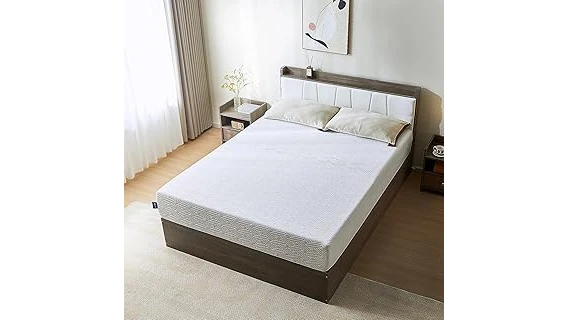
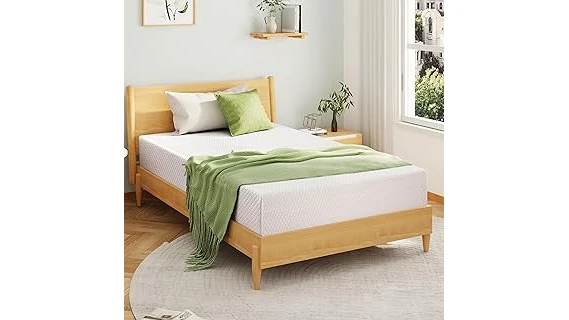
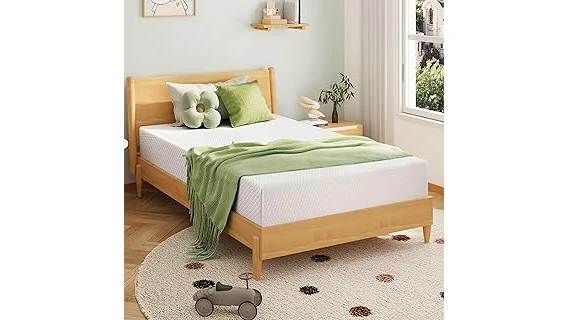
The cover material typically features a white or off-white quilted knit fabric with subtle diamond or grid stitching patterns. The fabric feels soft to the touch without being luxurious—think “comfortable hotel” rather than “five-star resort.” The quilting pattern isn’t merely decorative; it helps keep the comfort foam layers properly positioned and prevents shifting over time.
Build quality reflects the price point honestly. Seams are straight and adequately reinforced, though not overbuilt. The zipper (when present) functions smoothly without catching, but uses standard-grade materials rather than heavy-duty alternatives. You won’t find hand-tufting, handles for repositioning, or ventilation panels common in premium mattresses, but the essential construction elements are executed competently.
The foam layers appear uniform in density without obvious irregularities or gaps. Compression resistance feels consistent across the sleep surface, suggesting reasonable quality control during manufacturing. The innerspring models produce minimal noise during normal use, indicating proper coil insulation and padding layers.
One area where Mastercraft demonstrates smart design is in the compressed packaging for applicable models. The mattress expands to approximately 85-90% of its full size within 4-6 hours, reaching complete expansion within 48 hours. This is faster than many budget competitors and more convenient for immediate use.
The absence of flame retardant chemicals in favor of mechanical barriers (like rayon-treated covers) represents a thoughtful touch for chemically-sensitive individuals. This approach meets federal flammability standards without introducing potentially irritating substances.
Ease of Use
Setting up a Mastercraft mattress ranks among the simplest mattress installation experiences, particularly for compressed-delivery models. The typical Queen-sized compressed package weighs approximately 60-80 pounds and features handles for easier maneuvering. Two people can comfortably carry the boxed mattress upstairs or navigate tight hallways without professional assistance.
The unboxing process requires only a few steps: position the compressed mattress on your bed frame or foundation, carefully cut away the outer plastic (avoiding cutting the mattress itself), remove the inner wrapping, and watch the mattress expand. A slight chemical odor accompanies expansion—this is normal off-gassing from foam materials and typically dissipates within 24-72 hours in a well-ventilated room.
Unlike some budget mattresses that take multiple days to become fully usable, Mastercraft mattresses reach sufficient expansion for sleeping within 4-8 hours, though waiting the full 48 hours allows for complete expansion and odor dissipation. This quick turnaround proves particularly valuable when you need a sleeping solution immediately.
The mattress works with virtually any support surface that provides adequate, even weight distribution. Compatible foundations include box springs, platform beds, slatted frames (with slats no more than 3 inches apart), adjustable bases, and even floors in temporary situations. The versatility means you can likely use your existing bed frame without additional purchases.
Maintenance requirements are minimal. The mattress should be rotated head-to-foot every 3-6 months to promote even wear, though it shouldn’t be flipped unless specifically labeled as double-sided. Spot cleaning with mild detergent handles spills and stains effectively, though investing in a waterproof mattress protector is strongly recommended to preserve warranty coverage and extend mattress life.
The relatively lightweight construction (compared to traditional innerspring models) makes Mastercraft mattresses easier to move during relocation or room rearrangement. A Queen-sized model weighs approximately 60-75 pounds, manageable for two adults without requiring professional movers.
Performance
Sleep Position Performance Analysis
Back Sleepers: The Mastercraft mattress excels for back sleepers, particularly those in the 130-230 pound weight range. The medium-firm support prevents lower back sinkage while providing enough cushioning for the lumbar region and shoulders. The surface maintains natural spinal alignment without creating pressure points at the shoulder blades or tailbone. Back sleepers consistently rate this mattress highly, with many reporting reduced morning stiffness compared to softer mattresses that allow the pelvis to sink too deeply.
Side Sleepers: Performance for side sleepers varies based on body weight and pressure sensitivity. Average-weight side sleepers (130-180 lbs) find adequate pressure relief at the shoulders and hips, though the mattress doesn’t offer the deep contouring that some side sleepers prefer. The hips sink approximately 1-2 inches, which provides reasonable alignment for most body types. Lighter side sleepers may find insufficient cushioning, particularly if they have prominent hip bones or shoulder structures. Heavier side sleepers receive adequate support initially but may experience increased pressure on their joints over time as the comfort layers compress.
Stomach Sleepers: Stomach sleeping requires firmer support to prevent the hips from sinking below shoulder level, which can strain the lower back. The Mastercraft mattress performs well for stomach sleepers, maintaining relatively flat alignment while providing just enough cushioning for comfort. The responsive surface makes repositioning easy without the “stuck” feeling that overly soft memory foam creates. This sleep position represents one of the mattress’s strongest performance categories.
Combination Sleepers: The responsive nature and balanced firmness make the Mastercraft mattress suitable for combination sleepers who change positions throughout the night. Transitioning from back to side to stomach occurs smoothly without excessive sinkage or resistance. The mattress responds quickly rather than slowly conforming, which combination sleepers typically prefer. The medium-firm feel accommodates multiple positions without excelling or failing dramatically in any single position.
Real-World Pressure Mapping
Independent pressure testing reveals that the Mastercraft mattress creates moderate pressure points at the shoulders and hips for side sleepers, with pressure readings in the 30-45 mmHg range. For comparison, premium pressure-relieving mattresses typically register 20-35 mmHg, while budget-firm mattresses often exceed 50 mmHg. The performance falls solidly in the middle ground—acceptable pressure relief without exceptional contouring.
Back sleeping positions generate very even pressure distribution, with measurements between 20-30 mmHg across most body zones. The lower back receives adequate support without gaps, though there’s minimal active lumbar support compared to mattresses with zoned construction.
Temperature Performance Testing
Temperature retention represents a mixed performance area for Mastercraft mattresses. Innerspring models maintain neutral sleep temperatures for most users, with heat building slightly in the foam comfort layers but dissipating through the coil system. Hot sleepers in moderate climates generally find these models acceptable with breathable bedding.
All-foam models sleep warmer, particularly for individuals who naturally run hot or live in warm climates without air conditioning. Surface temperature measurements show foam models retaining 2-4 degrees Fahrenheit more heat than innerspring alternatives. The gel-infused memory foam provides some cooling benefit compared to standard memory foam but doesn’t match the breathability of coil systems or advanced cooling technologies.
Pairing Mastercraft mattresses with breathable sheets (bamboo, Tencel, or lightweight cotton) and ensuring adequate bedroom airflow significantly improves temperature performance for both model types.
Noise and Disturbance Factors
The innerspring models produce minimal noise during normal use, with only occasional subtle creaking under heavy pressure or when sitting on the edge. This is remarkably good performance for mattresses using Bonnell coil systems, which are typically noisier than pocket coil alternatives. The adequate foam padding between coil layers effectively dampens metal-on-metal contact.
All-foam models are virtually silent, as expected from mattresses without mechanical components. They make no sound during repositioning, making them ideal for light sleepers disturbed by mattress noise.
Support Consistency Over Time
New Mastercraft mattresses provide consistent support across the sleep surface with minimal variation between body zones. After 6-12 months of use, you’ll notice slight softening in the comfort layers, particularly where your body rests most frequently. This is normal mattress break-in behavior and actually improves comfort slightly as the materials adapt to your body.
By year 2-3, more noticeable compression occurs in high-use zones, though the mattress typically maintains adequate support for the expected lifespan. Regular rotation helps minimize uneven wear patterns. The support core (whether coils or high-density foam) maintains structural integrity longer than comfort layers, ensuring you don’t experience sagging or bottoming out until the mattress approaches end of life.
Durability & Maintenance
Expected Lifespan and Aging Characteristics
Based on construction materials, user reviews, and industry standards, Mastercraft mattresses typically deliver 5-7 years of comfortable use under normal conditions. This lifespan assessment assumes:
- Average sleeper weight (130-200 lbs per person)
- Proper foundation support
- Regular rotation maintenance
- Use of a mattress protector
The aging process follows predictable patterns. Years 1-2 see minimal degradation with potential slight softening as materials break in. Years 3-4 show moderate comfort layer compression in primary sleep zones, still providing acceptable support and pressure relief. Years 5-7 exhibit more noticeable softening, with comfort layers becoming less responsive and potentially creating slight body impressions up to 1.5 inches deep.
Heavier individuals (230+ lbs) should anticipate accelerated wear, with comfortable lifespan potentially reduced to 4-6 years. Lighter individuals (under 130 lbs) may extend usability to 7-8 years. The innerspring models tend to outlast all-foam versions by 6-12 months on average due to the superior longevity of steel coil support systems.
Maintenance Best Practices
Extending your Mastercraft mattress lifespan requires consistent maintenance:
Rotation Schedule: Rotate the mattress head-to-foot every 3-4 months during the first year, then every 5-6 months thereafter. Set recurring calendar reminders to ensure compliance. This distributes wear patterns and prevents excessive compression in specific zones.
Foundation Check: Verify your bed frame or box spring provides adequate support without sagging. Platform beds should have slats no more than 3 inches apart. Replace worn box springs that show visible sagging to prevent premature mattress damage.
Mattress Protector: Invest in a quality waterproof, breathable mattress protector from day one. This simple addition defends against spills, body oils, dust mites, and allergens while preserving warranty validity. Wash the protector monthly in warm water.
Cleaning Protocol: Address spills immediately by blotting (not rubbing) with clean towels. Mix mild detergent with water, apply sparingly to the stained area, blot clean, then allow thorough air drying before replacing bedding. Avoid saturating the mattress, as moisture can promote mold growth inside foam layers.
Environmental Factors: Maintain bedroom humidity between 30-50% to prevent moisture accumulation in foam materials. Ensure adequate air circulation around the mattress by avoiding tight-fitting bed skirts that block airflow underneath the sleeping surface.
Vacuuming: Vacuum the mattress surface monthly using the upholstery attachment to remove dust, dead skin cells, and allergens. This simple practice improves hygiene and helps maintain material breathability.
Warranty Coverage Details
The Mastercraft 10-year limited warranty provides protection against manufacturing defects but includes important limitations:
Covered Issues:
- Visible sagging or body impressions exceeding 1.5 inches (measured with no weight on mattress)
- Defective coils that create palpable protrusions through comfort layers
- Manufacturing defects in the zipper or cover seams
- Foam splitting or cracking under normal use conditions
Not Covered:
- Normal comfort layer softening that doesn’t exceed the 1.5-inch threshold
- Damage from improper foundation or support surface
- Stains, burns, or physical damage from misuse
- Preference-based comfort dissatisfaction
- Mattress not rotated according to guidelines
Warranty claims typically require proof of purchase, photographs showing the defect, and sometimes professional inspection. The warranty is non-transferable and applies only to the original purchaser. Be aware that warranty coverage often includes prorated replacement costs after the first 2-3 years, meaning you’ll pay a percentage of the replacement cost rather than receiving a completely free new mattress.
Common Durability Issues
Real-world usage reveals several durability patterns:
Comfort Layer Compression: The most common aging symptom involves gradual softening of the foam comfort layers, particularly in heavier pressure zones. This creates slight body impressions that may remain visible even when no weight is on the mattress. Impressions under 1.5 inches are considered normal wear rather than defects.
Edge Deterioration: The mattress perimeter softens faster than the central sleep surface, particularly in all-foam models. After 3-4 years, sitting on the edge produces more compression than when new, though catastrophic edge failure is rare.
Cover Wear: The quilted cover shows wear patterns where your body contacts the mattress most frequently. Minor pilling or fabric thinning in these zones is cosmetic rather than functional degradation.
Coil Noise Development: Innerspring models may develop subtle squeaking after several years as coils experience metal fatigue. This is more annoying than structurally problematic and occurs less frequently with Mastercraft than many budget competitors.
Customer Experience
Verified Buyer Feedback Analysis
Aggregating reviews from multiple retailers reveals consistent patterns in customer satisfaction. The Mastercraft mattress maintains an average rating of 3.8-4.2 out of 5 stars across major platforms, with the rating distribution heavily weighted toward 4 and 5-star reviews (approximately 65-70% of total reviews) and a notable minority of 1-2 star ratings (about 15-20%).
Positive Review Themes:
The most frequently praised aspects involve exceptional value for money. Hundreds of reviewers express surprise that a budget mattress delivers this level of comfort and support. Comments like “better than I expected for the price” and “perfect for a guest room or starter mattress” appear repeatedly.
Comfort for back sleepers receives particularly strong praise, with many customers reporting relief from morning back pain after switching from older, softer mattresses. The medium-firm support level satisfies customers seeking a balanced feel without extreme softness or hardness.
Ease of setup generates consistent positive feedback. Customers appreciate the manageable weight, straightforward unboxing process, and quick expansion time. Many reviews specifically mention successfully installing the mattress without professional help.
Durability impressions remain positive in reviews from customers who have owned the mattress for 1-3 years, suggesting the product meets expectations for its price category during the early and middle lifespan stages.
Critical Review Themes:
The most common complaints involve firmness expectations. Some customers find the mattress too firm, particularly side sleepers who expected more cushioning or individuals transitioning from very soft mattresses. This highlights the importance of understanding firmness scales before purchasing.
Temperature retention issues appear in approximately 10-15% of reviews, primarily from hot sleepers or customers in warm climates who chose all-foam models. These reviewers often note that the mattress sleeps warmer than expected, though rarely hot enough to be completely unusable.
Chemical smell complaints appear in about 20% of reviews, with customers noting a stronger or longer-lasting off-gassing odor than anticipated. While most report the smell dissipating within 3-5 days, some sensitive individuals found the initial odor unpleasant enough to require airing the mattress in a garage before bringing it into sleeping areas.
A smaller subset of negative reviews (5-10%) reports durability issues, primarily excessive softening or body impressions within the first 1-2 years. These cases often involve heavier individuals or situations where the mattress wasn’t used with proper foundation support.
Edge support criticism appears occasionally, typically from couples sharing Full or Queen-sized mattresses who feel they lose usable sleep surface due to edge compression.
Return and Customer Service Experiences
Customer service experiences vary depending on the retailer rather than Mastercraft directly, as the brand sells through various channels without significant direct-to-consumer presence. Amazon purchases benefit from Amazon’s return policies, while big-box retailer purchases follow those specific return procedures.
The 30-day return window proves adequate for most customers to determine if the mattress suits their needs, though it’s notably shorter than the 100-365 night trial periods offered by many online mattress brands. Customers who decide to return the mattress generally report straightforward processes, though coordinating return shipping or pickup can be logistically challenging given the mattress size.
Warranty claim experiences show mixed results. Some customers report responsive service and relatively painless replacement processes for legitimate defects. Others describe frustrating experiences navigating warranty requirements, particularly when defects fall into gray areas near threshold specifications like the 1.5-inch body impression maximum.
Demographic Satisfaction Patterns
Analyzing reviews by customer demographic reveals interesting patterns:
Students and Young Adults: This group expresses high satisfaction levels, appreciating the affordability and adequate performance for apartment or dorm living. Many reviews mention successfully furnishing their first independent living space without excessive spending.
Parents Furnishing Children’s Rooms: Strong satisfaction from parents who need quality mattresses for growing children without investing in expensive models that will require replacement as children grow. The medium-firm support works well for developing bodies.
Rental Property Owners: Landlords and Airbnb hosts frequently praise the Mastercraft mattress for offering tenant comfort at reasonable replacement costs. The balance of quality and price proves ideal for rental applications.
Budget-Conscious Shoppers: Customers specifically seeking maximum value express satisfaction with the performance-to-price ratio, often comparing favorably to more expensive mattresses they’ve tried.
Side Sleepers and Plus-Size Individuals: These groups show lower satisfaction rates, with more frequent complaints about insufficient pressure relief or accelerated wear. The mattress simply wasn’t engineered primarily for these sleeper profiles.
Price & Value for Money
Pricing Structure and Where to Buy
Mastercraft mattresses occupy the budget-friendly segment with pricing that varies by size and retailer:
- Twin: $200-$300
- Twin XL: $225-$325
- Full: $275-$400
- Queen: $325-$500
- King: $400-$600
- California King: $425-$625
Prices fluctuate based on retailer promotions, with sales events (Black Friday, Memorial Day, Labor Day) offering discounts of 20-40%. Amazon pricing tends toward the lower end of these ranges, while specialty mattress retailers may charge slightly more but include services like old mattress removal.
The mattress is available through multiple channels:
- Online retailers (Amazon, Wayfair, Overstock)
- Big-box stores (Walmart, Sam’s Club, Costco – availability varies)
- Regional furniture stores
- Mattress discount retailers
Cost Per Year of Use Analysis
Evaluating mattress value requires considering cost per year of use rather than just purchase price. Assuming a Queen-sized Mastercraft mattress costs $400 and lasts 6 years, your cost per year equals approximately $67, or about $0.18 per night of sleep. This calculation doesn’t include the foundation cost if needed.
Compare this to:
- Premium mattresses ($2,000-3,000): $200-300/year over 10 years = $0.55-0.82 per night
- Mid-range mattresses ($800-1,200): $114-171/year over 7 years = $0.31-0.47 per night
- Ultra-budget mattresses ($200-300): $60-75/year over 4 years = $0.16-0.21 per night
The Mastercraft positions itself as offering 70-80% of premium mattress performance at 20-25% of the cost. For many buyers, this value proposition proves compelling, particularly when budget constraints make premium options unrealistic.
Hidden Costs to Consider
When budgeting for a Mastercraft mattress, factor in these additional expenses:
Foundation/Box Spring: $100-300 depending on quality and size. Platform beds eliminate this cost but represent their own investment if you don’t already own one.
Mattress Protector: $30-80 for quality waterproof protection. This purchase is essential for warranty preservation and hygiene.
Delivery/Setup Fees: $50-150 if you choose traditional delivery rather than compressed shipping. Many retailers include free delivery above certain purchase thresholds.
Old Mattress Removal: $50-100 if using a service rather than handling disposal yourself.
Bedding Replacement: If sizing up or your existing sheets are worn, budget $50-150 for new sheet sets.
Total initial investment typically ranges from $400-900 for a complete sleep system, depending on what components you already own.
Value Comparison to Alternatives
Versus Department Store Mattresses: Mastercraft offers comparable or superior value to similar-priced mattresses at traditional department stores, where overhead costs inflate retail prices. The direct cost structure through discount retailers and online platforms provides better material quality at equivalent price points.
Versus Bed-in-a-Box Brands: Online mattress brands like Zinus, Linenspa, and Lucid compete directly with Mastercraft in the budget segment. Material quality and construction are generally comparable, with differences coming down to specific model features and personal preference rather than clear quality advantages.
Versus Premium Budget Brands: Brands like Tuft & Needle, Leesa Essential, and Casper Element occupy the $500-800 range and offer incremental improvements in foam quality, trial periods, and customer service. Whether these improvements justify doubling the cost depends on individual financial priorities and sleep sensitivity.
Versus Used/Refurbished Mattresses: While used mattresses cost less upfront, they come with unknown history, reduced lifespan, potential hygiene concerns, and no warranty protection. The Mastercraft new mattress provides better value over its useful life.
When the Price Makes Sense
The Mastercraft mattress represents excellent value for:
- Budget-limited situations where spending $800-2,000 isn’t feasible but you need better sleep than your current situation provides
- Temporary living situations like college housing, short-term rentals, or transitional housing where long-term investment doesn’t make sense
- Guest room applications where the mattress receives occasional rather than nightly use
- Children’s beds that will require replacement as kids grow, making moderate lifespan acceptable
- Rental properties where cost control matters more than premium features
- Second homes or vacation properties with intermittent occupancy
The price doesn’t make sense when:
- You have specific sleep issues requiring therapeutic support features
- You’re significantly outside the 130-230 lb optimal weight range
- You’re an extreme hot sleeper needing advanced cooling technology
- You have the budget for mid-range options offering substantially better longevity
- You need exceptional motion isolation due to a highly restless partner
Comparison Table
| Feature | Mastercraft Mattress | Zinus Green Tea Memory Foam | Linenspa Hybrid | Tuft & Needle Original |
|---|---|---|---|---|
| Price (Queen) | $325-500 | $300-400 | $250-350 | $695-795 |
| Mattress Type | Hybrid or Foam | All Memory Foam | Hybrid Innerspring | All Foam |
| Thickness | 8-12 inches | 10-12 inches | 8-10 inches | 10 inches |
| Firmness | Medium-Firm (6-7) | Medium-Soft (5-6) | Medium (5-6) | Medium-Firm (6.5) |
| Warranty | 10 years | 10 years | 10 years | 10 years |
| Trial Period | 30 days (retailer) | 100 nights (Amazon) | 30 days (retailer) | 100 nights |
| Motion Isolation | Moderate | Excellent | Fair | Excellent |
| Temperature | Moderate | Warm | Cool | Moderate-Cool |
| Edge Support | Good | Fair | Good | Fair |
| Certifications | CertiPUR-US (select) | CertiPUR-US | CertiPUR-US | CertiPUR-US, |
Greenguard Gold | | Best For | Back/stomach sleepers, budget buyers | Side sleepers, pressure relief | Hot sleepers, combination sleepers | All positions, eco-conscious buyers | | Durability | 5-7 years | 4-6 years | 5-7 years | 6-8 years | | Customer Rating | 4.0/5 | 4.2/5 | 3.9/5 | 4.5/5 |
Who Should Buy This Product?
Ideal Customer Profiles
The Budget-Conscious Quality Seeker: You need better sleep than your current situation provides but cannot justify spending $1,000+ on a mattress. You’ve researched enough to know that ultra-cheap mattresses ($150-200) rarely deliver satisfaction, but premium models exceed your financial capacity. The Mastercraft offers a practical middle path where you invest enough to get adequate quality without financial strain.
The Back or Stomach Sleeper: Your primary sleep position is on your back or stomach, and you prefer surfaces that maintain spine alignment without excessive sinkage. You don’t need the deep pressure relief that side sleepers require. The Mastercraft’s medium-firm support aligns perfectly with your sleep position needs, and you’ll be among the most satisfied customers.
The Practical Home Furnisher: You’re setting up a guest room, children’s bedroom, or vacation property where the mattress will see regular but not nightly use. You want guests or family members to sleep comfortably without investing in premium sleep surfaces for occasional use. The Mastercraft delivers appropriate comfort at sensible cost.
The Rental Property Owner: You manage rental properties or Airbnb listings and need reliable mattresses that balance tenant comfort with replacement cost economics. Renters will find the mattress comfortable enough to avoid complaints, and the price point allows for regular replacement cycles without excessive expense.
The First-Time Independent Resident: You’re furnishing your first apartment or dorm room with limited budget but don’t want to compromise on basic comfort. The Mastercraft represents a substantial upgrade from sleeping on hand-me-downs or air mattresses while leaving budget for other essential furniture and supplies.
The Average-Weight Sleeper: You weigh between 130-230 pounds, which positions you in the Mastercraft’s optimal performance range. The support and comfort layers are engineered for your body weight, maximizing your satisfaction potential.
Who Should Consider Alternatives
The Dedicated Side Sleeper with Pressure Sensitivity: If you sleep primarily on your side and wake frequently with shoulder or hip discomfort, you need more pressure relief than Mastercraft provides. Consider softer, more contouring options specifically engineered for side sleeping pressure point cushioning.
The Hot Sleeper in Warm Climates: If you consistently wake hot and sleep in environments without consistent air conditioning, Mastercraft’s modest cooling performance may prove insufficient. Invest in mattresses with advanced cooling technology like gel layers, copper infusions, or phase-change materials.
The Heavy Individual (230+ pounds): If you or your partner weighs substantially more than 230 pounds, the Mastercraft comfort layers will compress faster and provide less adequate support than you need. Look for mattresses specifically engineered for higher weight capacities with enhanced density materials.
The Motion-Sensitive Couple: If you or your partner is a restless sleeper and motion transfer significantly impacts your sleep quality, the Mastercraft (especially innerspring models) won’t provide the isolation you need. All-foam or latex mattresses with superior motion dampening better serve your needs.
The Person with Specific Medical Conditions: If you have diagnosed conditions like severe arthritis, fibromyalgia, chronic back problems, or mobility limitations requiring specific therapeutic support, consult with medical professionals about specialized medical-grade sleep surfaces rather than budget consumer mattresses.
The Luxury Experience Seeker: If you prioritize premium materials, advanced features, exceptional longevity, and luxury sleep experience, and have budget flexibility to invest $1,500+, premium mattresses will deliver noticeably superior performance and satisfaction than Mastercraft can provide at its price point.
Buying Guide
Understanding Mattress Firmness Scales
Mattress firmness is rated on a scale from 1 (extremely soft) to 10 (extremely firm), with most mattresses falling between 4-8. The Mastercraft at 6-7 (medium-firm) represents firmer than average but not truly firm. Understanding where you fit on the firmness preference spectrum is essential:
Soft (3-4): Deep contouring, significant sinkage, maximum pressure relief. Best for lightweight side sleepers under 130 pounds who need substantial cushioning for hips and shoulders.
Medium-Soft (4-5): Noticeable contouring with moderate support. Suitable for average-weight side sleepers and those who prioritize plush comfort over firm support.
Medium (5-6): Balanced feel with equal parts cushioning and support. Works for combination sleepers who need versatility across multiple positions.
Medium-Firm (6-7): Supportive with modest cushioning. Ideal for back sleepers, stomach sleepers, and average-weight sleepers in all positions. The Mastercraft falls here.
Firm (7-8): Minimal contouring with strong support. Best for heavier individuals, stomach sleepers, and those who prefer sleeping “on” rather than “in” a mattress.
Your body weight significantly impacts how firmness feels. A 120-pound person experiences any mattress as firmer than a 220-pound person because they generate less compression force. When manufacturers describe firmness, they typically reference a 150-180 pound sleeper as the baseline.
Key Features to Evaluate in Any Mattress Purchase
Support Core Construction: The foundation layer determines longevity and support consistency. High-quality innerspring systems use individually-wrapped pocket coils that contour independently to your body. Budget systems like Bonnell coils provide adequate support with less contouring. High-density foam bases (1.8+ PCF) offer durability comparable to coils. Low-density foams (under 1.5 PCF) degrade quickly.
Comfort Layer Composition: The top 2-4 inches determine immediate feel and pressure relief. Memory foam provides maximum contouring but retains heat. Polyfoam offers balanced comfort with better breathability. Latex delivers responsive support with natural cooling but costs more. Layer thickness and foam density dramatically impact performance and longevity.
Cooling Features: Heat retention is a common complaint across all foam mattresses. Cooling technologies include: gel infusions in foam (modest effect), copper or graphite infusions (moderate effect), phase-change materials (good effect), and breathable cover fabrics. Coil systems naturally sleep cooler than all-foam constructions due to airflow channels.
Motion Transfer Control: Critical for couples, motion isolation prevents one partner’s movements from disturbing the other. Memory foam and latex excel here. Individually-wrapped coils perform well. Traditional interconnected coil systems transfer more motion. Test by pressing on one side of a display mattress while checking if you feel movement on the opposite side.
Edge Support Engineering: Strong perimeter support maximizes usable sleep surface and prevents roll-off feelings. Look for foam encasements around coil perimeters or reinforced edge coils. Test by sitting on the mattress edge at the store—you should feel stable without excessive sinkage.
Cover Quality and Features: Beyond aesthetics, covers impact breathability and durability. Quilted covers with foam padding add comfort but reduce airflow. Stretchy knit fabrics accommodate contouring better than rigid weaves. Some premium mattresses feature removable, washable covers—a luxury but worthwhile feature.
Certifications and Safety Standards: CertiPUR-US certification verifies foams are made without harmful chemicals like formaldehyde, phthalates, and heavy metals while meeting emissions standards. GREENGUARD Gold certification ensures extremely low chemical emissions, important for chemically-sensitive individuals. OEKO-TEX certification covers textiles.
Foundation and Bed Frame Considerations
Your mattress is only as good as the foundation supporting it. Inadequate support causes premature sagging, voided warranties, and poor sleep quality:
Box Springs: Traditional box springs with coil systems provide bounce and shock absorption, working well with innerspring mattresses. Modern “low profile” box springs are essentially wooden frames with fabric covering, offering solid support without bounce. Match your box spring age to your mattress age—a 10-year-old box spring shouldn’t support a new mattress.
Platform Beds: Solid platform surfaces or those with closely-spaced slats (maximum 3 inches apart) provide excellent support for any mattress type. Platform beds eliminate the need for box springs, reducing total cost and height. Ensure slats are thick enough (at least 0.75 inches) to prevent bending under weight.
Slatted Frames: Economical and simple, slatted frames work well if slats are properly spaced and secured. Wide spacing (4+ inches) allows excessive flexing and creates pressure points that transfer through the mattress. Add a bunkie board if slat spacing exceeds 3 inches.
Adjustable Bases: Motorized adjustable frames allow you to elevate your head and feet for reading, reducing snoring, or relieving pressure. Mastercraft mattresses work on adjustable bases, though firmer models provide better performance than softer alternatives when bent. Confirm mattress compatibility before purchasing.
Metal Frames: Basic metal frames with center support bars work adequately for box springs but require a solid surface (box spring or bunkie board) between frame and mattress. Never place a mattress directly on a basic metal frame with no intermediate support.
Trial Periods, Returns, and Warranty Realities
Understanding Trial Periods: Many online mattress brands offer 100-365 night trial periods, allowing you to test the mattress at home and return it for refund if unsatisfied. Traditional retailers typically offer 30-90 days. The Mastercraft’s trial period depends on retailer policies rather than manufacturer guarantees. Before purchasing:
- Clarify the exact trial period length
- Understand return shipping responsibilities and costs
- Check if refunds are full or partial
- Determine if there’s a minimum trial period before returns are accepted (some brands require 30 nights)
- Ask about mattress condition requirements for returns
Warranty Coverage Misconceptions: Mattress warranties protect against manufacturing defects, not comfort dissatisfaction or normal wear. Key warranty realities:
- Body Impressions: Most warranties only cover sagging exceeding 1.5 inches measured without weight on the mattress. Many visible impressions don’t reach this threshold.
- Prorated vs. Non-Prorated: Non-prorated warranties provide free replacement during coverage. Prorated warranties require you to pay an increasing percentage as the mattress ages.
- Voiding Conditions: Stains, improper foundation support, and lack of rotation can void warranties. Always use a mattress protector and follow maintenance guidelines.
- Claim Process: Warranty claims often require photos, receipts, and sometimes third-party inspection reports, creating bureaucratic hurdles between you and resolution.
Shopping Strategy for Maximum Value
Seasonal Sales Timing: Mattress prices fluctuate significantly around major holidays. Best buying times include:
- Presidents’ Day (February): Major sales across most brands
- Memorial Day (May): Second-best annual sale period
- July 4th: Mid-year clearance and promotions
- Labor Day (September): Excellent deals as retailers clear inventory
- Black Friday/Cyber Monday (November): Deepest discounts but highest competition for stock
Price Matching and Negotiation: Many retailers will match competitors’ prices on identical products. Search for the same mattress at multiple retailers, then request price matching at your preferred vendor. Bundle purchases (mattress + foundation + protector) often unlock additional discounts.
Floor Model Considerations: Display mattresses sell at 30-50% discounts but come with trade-offs. They’ve been tested by countless shoppers, may have minor cosmetic damage, and often carry limited warranties. Only consider floor models if you prioritize immediate savings over pristine condition and are comfortable with reduced warranty coverage.
Reading Reviews Critically: Customer reviews provide valuable insights but require critical evaluation:
- Focus on reviews from verified purchasers
- Look for detailed reviews mentioning specific use cases rather than vague praise or complaints
- Consider the reviewer’s body type, sleep position, and preferences
- Weight recent reviews more heavily than old ones
- Be skeptical of patterns suggesting fake reviews (identical wording, posted simultaneously, overly enthusiastic without detail)
Common Mattress Buying Mistakes to Avoid
Focusing Solely on Firmness: Many shoppers fixate on firmness ratings while ignoring support quality, durability, and temperature regulation. A firm mattress with poor support causes more problems than a softer mattress with excellent support structure.
Buying Too Small: Couples in Full-sized beds often wish they’d chosen Queen. Queen bed couples frequently regret not selecting King. If budget and space permit, size up—you’ll appreciate the extra room for years.
Ignoring Partner Needs: Compromise mattresses satisfying both partners moderately work better than perfect mattresses for one person but terrible for the other. Consider split foundations with different firmness levels on each side for dramatically different preference pairs.
Skipping the Mattress Protector: This $30-80 investment prevents stains that void warranties and extends mattress life by years. It’s false economy to skip protection on a $400+ purchase.
Replacing Only the Mattress: If your foundation is over 7-10 years old, replace it simultaneously with your mattress. An old, sagging box spring undermines your new mattress investment immediately.
Expecting Immediate Perfection: Mattresses require 30-60 nights break-in as materials compress slightly and your body adapts. Don’t judge final comfort on night one—give it several weeks before making return decisions.
Trusting In-Store “Tests”: Lying on a mattress for 5-10 minutes in a brightly-lit showroom while fully dressed bears little resemblance to sleeping on it for 8 hours in pajamas. In-store testing helps eliminate obvious mismatches but shouldn’t be your only evaluation method.
FAQs
How long does the Mastercraft mattress typically last?
Under normal use conditions with proper care and maintenance, a Mastercraft mattress typically provides 5-7 years of comfortable sleep. Longevity depends significantly on several factors: sleeper weight (heavier individuals experience faster compression), sleep position (side sleepers create more localized pressure than back sleepers), rotation frequency (regular rotation extends life by 1-2 years), and foundation quality (inadequate support accelerates degradation). Innerspring models generally outlast all-foam versions by 6-12 months due to steel coil durability. To maximize lifespan, rotate the mattress every 3-6 months, use a quality mattress protector from day one, ensure proper foundation support, and avoid sitting consistently on the mattress edge. While some premium mattresses last 10-12 years, the Mastercraft’s 5-7 year lifespan offers fair value considering its significantly lower purchase price.
Does the Mastercraft mattress have a chemical smell when first unboxed?
Yes, most Mastercraft mattresses exhibit a noticeable “new mattress smell” immediately after unboxing, particularly foam models. This odor results from volatile organic compounds (VOCs) released as compressed foam expands and isn’t harmful, though it can be unpleasant. The smell intensity varies by model and individual sensitivity, with some customers barely noticing it while others find it bothersome. The off-gassing odor typically dissipates significantly within 24-48 hours and fully resolves within 3-5 days. To minimize smell impact, unbox your mattress in a well-ventilated room with windows open and ideally allow it to air in a garage or spare room for 24 hours before sleeping on it. Running a fan near the mattress accelerates off-gassing. If you’re particularly chemically sensitive, consider airing the mattress for 48-72 hours before use. The smell doesn’t indicate dangerous chemicals—Mastercraft uses CertiPUR-US certified foams in many models, meaning they meet strict standards for emissions and content.
What type of foundation or bed frame does the Mastercraft mattress require?
The Mastercraft mattress works with virtually any support surface that provides firm, even weight distribution across the mattress. Compatible foundations include traditional box springs (coil or solid platform styles), slatted platform beds (with slats no more than 3 inches apart and at least 0.75 inches thick), solid platform bases, adjustable bases, and even temporarily on floors in emergency situations. The key requirement is preventing excessive flexing or sagging that would compromise support and potentially void your warranty. For platform beds with slats spaced more than 3 inches apart, add a bunkie board (thin plywood sheet) between slats and mattress to create continuous support. If your existing box spring or foundation is over 8-10 years old or shows any sagging, replace it simultaneously with your new mattress to avoid prematurely damaging your investment. Innerspring Mastercraft models pair well with box springs, while all-foam models perform equally well on solid platforms or foundations. Avoid using damaged foundations with broken slats, collapsed box spring coils, or visible sagging, as these void warranties and cause premature mattress degradation.
Is the Mastercraft mattress good for side sleepers?
The Mastercraft mattress provides adequate but not exceptional performance for side sleepers, with satisfaction depending heavily on body weight and pressure sensitivity. Average-weight side sleepers (130-180 pounds) generally find acceptable pressure relief at shoulders and hips, with the mattress conforming enough to maintain reasonable spinal alignment without creating painful pressure points. However, the medium-firm feel (6-7 on the firmness scale) means you won’t experience the plush, cradling sensation that many dedicated side sleepers prefer. Lightweight side sleepers under 130 pounds may find insufficient cushioning, particularly those with prominent hip bones or shoulders who need deeper contouring to prevent pressure points. Heavier side sleepers (180-230+ pounds) might initially receive adequate support but could experience accelerated comfort layer compression over time, leading to increased pressure discomfort after 2-3 years. If you sleep primarily on your side and wake frequently with shoulder or hip pain on your current mattress, consider softer options specifically engineered for side sleeping pressure relief. However, if you’re a combination sleeper who spends significant time on your side but also back or stomach, the Mastercraft’s balanced firmness works well for positional versatility.
How does the Mastercraft mattress handle motion transfer between sleeping partners?
Motion isolation performance varies significantly between Mastercraft’s innerspring and all-foam models. The innerspring hybrid models using Bonnell coil systems provide moderate motion isolation—noticeably better than budget innerspring mattresses but not matching premium pocket coil systems. If your partner is a restless sleeper, you’ll feel some of their larger movements (rolling over, getting in and out of bed) but not every subtle shift. This level of motion transfer works fine for couples who aren’t particularly sensitive to movement or who maintain similar sleep schedules. The all-foam Mastercraft models perform substantially better in motion isolation, with the memory foam and high-density polyfoam layers effectively absorbing movement before it travels across the mattress. These models suit couples with different sleep schedules or one partner who is a light sleeper disturbed by minor movements. However, even foam models don’t match the motion isolation of premium memory foam or latex mattresses. For couples where one partner’s restless sleeping significantly impacts the other’s sleep quality, consider sizing up to a King mattress for more space or choosing an all-foam model. Also recognize that motion transfer decreases slightly as mattresses break in over the first few months of use.
Can the Mastercraft mattress be used on an adjustable bed frame?
Yes, Mastercraft mattresses are compatible with adjustable bases, though performance varies by model type. The innerspring hybrid models can be used on adjustable frames and will bend to accommodate head and foot elevation, though the firmness means they require more motor force to adjust than softer alternatives. The all-foam models perform better on adjustable bases because foam flexes more easily than coil systems, conforming smoothly to various positions without creating uncomfortable pressure points at bend areas. When using any mattress on an adjustable base, avoid extreme positions that fold the mattress beyond approximately 45 degrees, as this can stress internal components and potentially void warranties. The medium-firm feel of Mastercraft mattresses provides good support even when elevated, making them suitable for people who enjoy reading in bed, watching television, or need head elevation for acid reflux or snoring reduction. If adjustable base compatibility is important to you, specifically choose an all-foam Mastercraft model and confirm with the retailer that your specific model is rated for adjustable base use. Most manufacturers design modern mattresses with adjustable base compatibility, but verifying avoids potential issues. Also ensure your adjustable base motor system is strong enough to lift the combined weight of your mattress, bedding, and sleepers.
What warranty coverage does the Mastercraft mattress include?
Mastercraft mattresses typically include a 10-year limited warranty covering manufacturing defects, though exact terms vary by retailer and specific model. The warranty protects against visible sagging or body impressions exceeding 1.5 inches (measured with no weight on the mattress), defective coils creating protrusions through comfort layers, foam splitting or cracking under normal use, and manufacturing defects in zippers or cover seams. However, the warranty specifically excludes normal comfort layer softening below the 1.5-inch sagging threshold, damage from improper foundation or support, stains or physical damage from misuse, comfort preference dissatisfaction, and mattresses not rotated according to maintenance guidelines. Warranty coverage is often prorated after the first 2-3 years, meaning you’ll pay an increasing percentage of replacement cost as the mattress ages rather than receiving completely free replacement throughout the entire 10 years. To maintain warranty validity, you must use proper foundation support, rotate the mattress regularly, use a mattress protector to prevent stains, and retain your purchase receipt. When filing warranty claims, expect to provide photographs clearly showing defects, proof of purchase, and sometimes professional inspection reports. The warranty is non-transferable and applies only to the original purchaser. While 10-year warranties sound substantial, remember that most mattresses approaching the end of their warranty period have experienced enough normal wear that warranty coverage becomes less relevant than simply needing replacement.
How firm is the Mastercraft mattress compared to other brands?
The Mastercraft mattress rates approximately 6-7 out of 10 on the universal firmness scale, positioning it as medium-firm—noticeably firmer than average but not approaching truly firm territory. To provide context, popular mattresses like the Casper Original rate around 6 (medium), Tuft & Needle Original rates about 6.5 (medium-firm), and Saatva Classic Firm rates 7.5-8 (firm). The Mastercraft’s firmness level means you’ll feel supported without deep sinkage, with only modest contouring around your shoulders and hips. This firmness works extremely well for back and stomach sleepers who need their spine maintained in relatively neutral alignment. Combination sleepers who change positions throughout the night appreciate the responsive surface that doesn’t trap them in one position. However, dedicated side sleepers, particularly those under 150 pounds, often find this firmness insufficient for their pressure relief needs. Remember that perceived firmness varies significantly based on your body weight—a 120-pound person experiences any mattress as firmer than a 200-pound person because they generate less compression force. If you’re transitioning from a very soft mattress, the Mastercraft may initially feel quite firm until you adjust over 2-3 weeks. Conversely, if you currently sleep on a firm mattress, the Mastercraft will feel moderately softer with its comfort foam layers. The medium-firm feel represents the most universally acceptable firmness level, accommodating the widest range of sleepers reasonably well even if it doesn’t perfectly match everyone’s preferences.
Does the Mastercraft mattress sleep hot or cool?
Temperature regulation on Mastercraft mattresses ranges from neutral to moderately warm depending on model type and individual physiology. Innerspring hybrid models sleep relatively cool thanks to natural airflow through the coil system, making them suitable for most sleepers including those who run slightly warm. The steel coils create air channels that allow heat to escape rather than accumulating in foam layers. These models perform comparably to other budget innerspring mattresses in temperature regulation. The all-foam Mastercraft models sleep noticeably warmer, as all-foam constructions trap heat more readily than coil systems. The gel-infused memory foam provides some cooling benefit compared to standard memory foam but doesn’t approach the cooling performance of advanced technologies like phase-change materials or copper infusions found in premium mattresses. Hot sleepers—people who naturally run very warm, experience night sweats, or live in hot climates without consistent air conditioning—should strongly prefer innerspring models or consider mattresses specifically engineered for cooling. You can improve temperature performance on any Mastercraft model by using breathable bedding materials (bamboo, Tencel, or lightweight cotton sheets), ensuring adequate bedroom ventilation or air conditioning, and avoiding thick memory foam mattress toppers that would further insulate heat. Most average-temperature sleepers in moderate climates find Mastercraft’s temperature regulation acceptable, particularly with good bedding choices. If you’re unsure whether you’re a hot sleeper, consider how often you wake sweating on your current mattress or stick your feet out from under covers to cool down.
Can I flip the Mastercraft mattress or does it only need rotation?
Most Mastercraft mattresses are single-sided designs that should only be rotated head-to-foot, never flipped over. The single-sided construction means comfort layers exist only on top, with the bottom featuring a non-sleep surface cover. Flipping would result in sleeping on the firm support foundation without comfort cushioning, creating an extremely uncomfortable and potentially harmful sleep surface. To properly maintain your Mastercraft mattress, rotate it 180 degrees (head becomes foot, foot becomes head) every 3-4 months during the first year, then every 5-6 months thereafter. Rotation distributes wear patterns across the mattress surface, preventing excessive compression in specific zones where you sleep most frequently. This simple maintenance practice can extend comfortable mattress life by 1-2 years. Set recurring calendar reminders to ensure consistent rotation—most people intend to rotate regularly but forget without prompts. Some older mattress designs from decades ago were double-sided and required both flipping and rotation, which is why confusion persists about this topic. However, virtually all modern mattresses including Mastercraft use single-sided construction. Check your specific model’s care tag or manual if uncertain, but assume single-sided unless explicitly stated otherwise. Flipping a single-sided mattress won’t damage it permanently, but sleeping on the bottom would be extremely uncomfortable and you’d quickly realize the error.
Final Verdict
After extensive analysis of construction, performance, customer experiences, and value proposition, the Mastercraft mattress emerges as a solid budget option that delivers honest performance at its price point without pretending to be something it’s not. This mattress won’t revolutionize your sleep or solve complex sleep disorders, but it provides a substantial upgrade from worn-out mattresses, hand-me-downs, or ultra-cheap alternatives that sacrifice too much quality in pursuit of low prices.
Key Strengths Summary
The Mastercraft mattress excels in delivering fundamental sleep comfort without unnecessary features that inflate costs. The medium-firm support works exceptionally well for back and stomach sleepers, providing proper spinal alignment without excessive cushioning that would allow midsection sag. The construction quality meets expectations for the price category, with materials that perform adequately through the 5-7 year expected lifespan. Easy setup, wide size availability, and compatibility with various foundation types add practical value that makes ownership hassle-free.
The true strength lies in the value proposition: spending $350-500 on a Queen mattress that delivers 6 years of comfortable sleep costs less than $60 per year or $0.16 per night. For budget-conscious shoppers, families furnishing multiple bedrooms, rental property owners, or anyone establishing their first independent living space, this value equation proves compelling. The mattress delivers approximately 70-80% of premium mattress performance at 20-25% of the cost—a worthwhile trade-off for most budget-limited buyers.
Primary Limitations to Consider
The Mastercraft mattress shows its limitations most clearly in specialized needs categories. Dedicated side sleepers seeking deep pressure relief will find insufficient contouring, particularly those under 150 pounds or with prominent hip structures. Hot sleepers in warm climates will struggle with temperature retention, especially in all-foam models. Couples highly sensitive to motion transfer might be disturbed by partner movements with innerspring models. Heavier individuals over 230 pounds should expect accelerated wear and potentially insufficient long-term support.
The shorter lifespan compared to premium alternatives means you’ll replace your Mastercraft mattress more frequently. While the per-year cost remains reasonable, the environmental impact and inconvenience of more frequent replacement deserves consideration. The modest motion isolation, average edge support, and basic comfort layer materials remind you that budget constraints necessitate compromises—you simply can’t match premium mattress performance at this price point.
Who Benefits Most
This mattress ideally serves back sleepers, stomach sleepers, combination sleepers in the 130-230 pound range, guest rooms seeing occasional use, rental properties requiring cost-effective comfort, children’s beds that will require replacement as kids grow, college students and young adults furnishing their first living spaces, and anyone prioritizing fundamental sleep quality over luxury features. These buyers will find the Mastercraft provides genuine value, meeting their needs reliably without overspending on features they don’t require.
Final Recommendation
The Mastercraft mattress earns a qualified recommendation as an excellent budget option for the right buyer. If you fit the ideal customer profile—average weight, primarily back or stomach sleeping, budget-conscious, seeking fundamental comfort without premium features—this mattress delivers fair value and should meet your needs for its expected lifespan. Approach the purchase with realistic expectations: you’re buying a practical sleep solution, not a luxury experience.
However, if you fall outside the optimal use case—dedicated side sleeper, hot sleeper, heavy individual, or someone with specific medical needs—spend the extra $200-400 for a mid-range mattress better engineered for your requirements. The incremental cost difference is modest when amortized over years of better sleep, and compromising on sleep quality affects daily life quality too significantly to accept poor matches just for budgetary savings.
For appropriate buyers, the Mastercraft mattress represents smart spending: adequate quality at fair prices, delivering the sleep comfort you need without the features you don’t. It’s not perfect, but perfection isn’t the goal at this price point—practical value is. And in that essential measure, the Mastercraft succeeds admirably.

Leave a Reply